

The First Fish of the Rest of My Life
Few trout are as storied as the wild rainbows of the McCloud. Meeting one in its home water reshaped what I thought I knew about fishing—and myself.

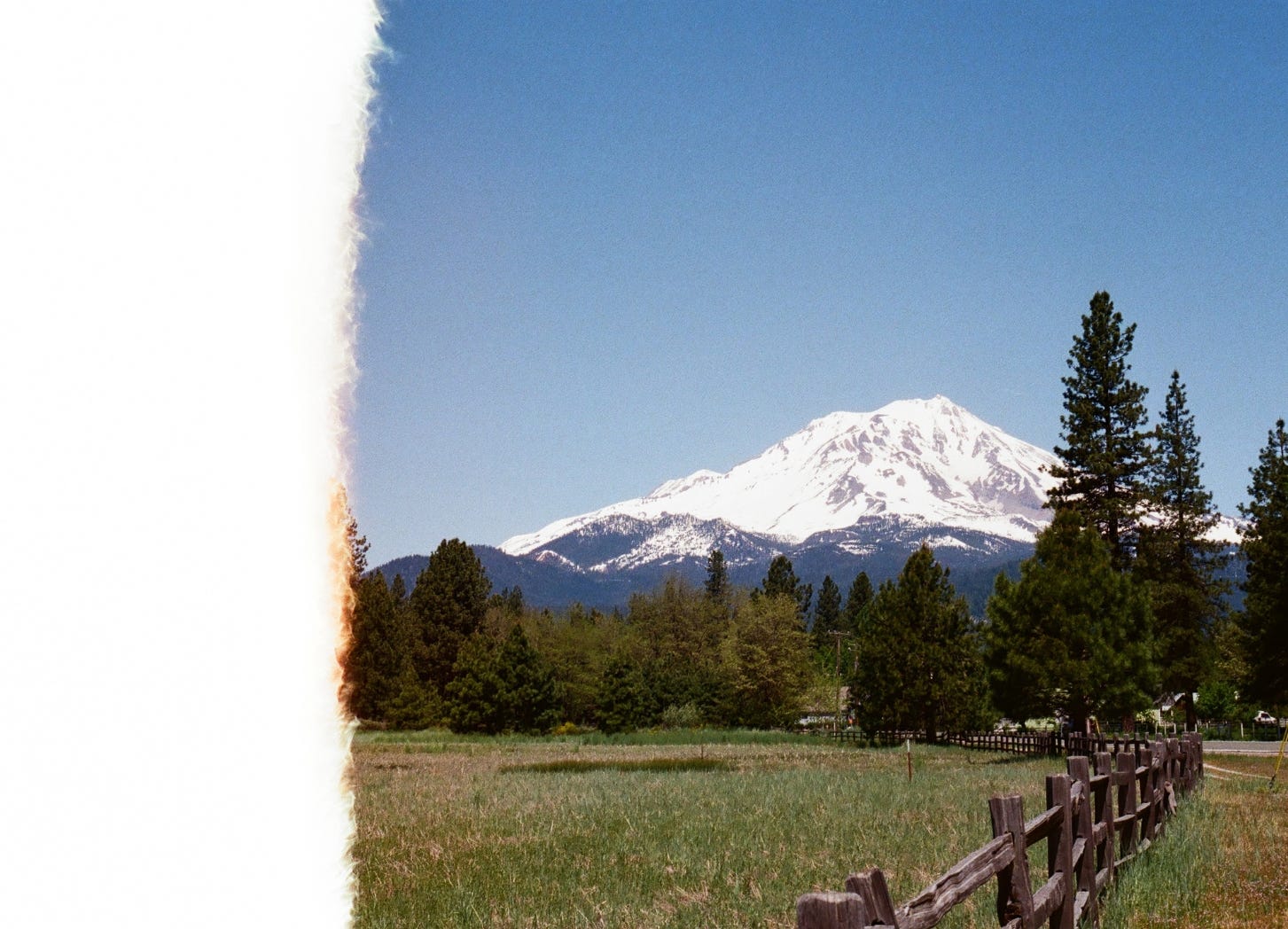
Photographs by Chris Wright // Canon AE-1, 35mm.
I have a complicated relationship with change.
As an angler, I relish change. On the water, a change in tactics can often improve my luck. I’ll change the fly, or where it sits in the water column, change the distance or direction of a cast, the speed of my retrieve. I change lines, leaders, and tippet — hell, even rods and reels — to suit my quests and the quarry that I chase.
In daily life, change rarely feels so grand. I cling to patterns, to ways of doing things, to beliefs long debunked. I tell myself these predilections — gin, up with a twist; swinging a wet fly in front of a rising fish; or that a new hat is unlucky until it’s sweatstained and dirty — are quirky, harmless signatures of who I am. But the truth is that consistency feels good. Reliable. And it soothes my innate discomfort with the unplanned and unforeseen.
Still, every so often, something in me itches for disruption. My resistance to change piles up and I long to cut loose, knock the rust off. Ironically, the only antidote to the self-imposed ennui is the very thing I try so hard to control. And for anglers, that means only one thing.
So in early February, in the midst of a particularly snowy winter, when my buddy Chris’s email dinged my inbox, the subject line —McCloud River Fishing Trip - May — read more like the antidote to my chronic malaise than an invitation.
Planning a fishing trip is like pushing a boulder down a mountain. You know it’ll reach the bottom, but you’re never sure how much damage it will do on the way down. Sometimes you just cover your eyes and hope for the best. That’s what I did, and before I knew it, I was standing in the sloped, dusty parking lot of the McCloud Market, watching sunlight ricochet off the snow-capped crater of Mount Shasta, wondering just how much of a mess I’d left behind.
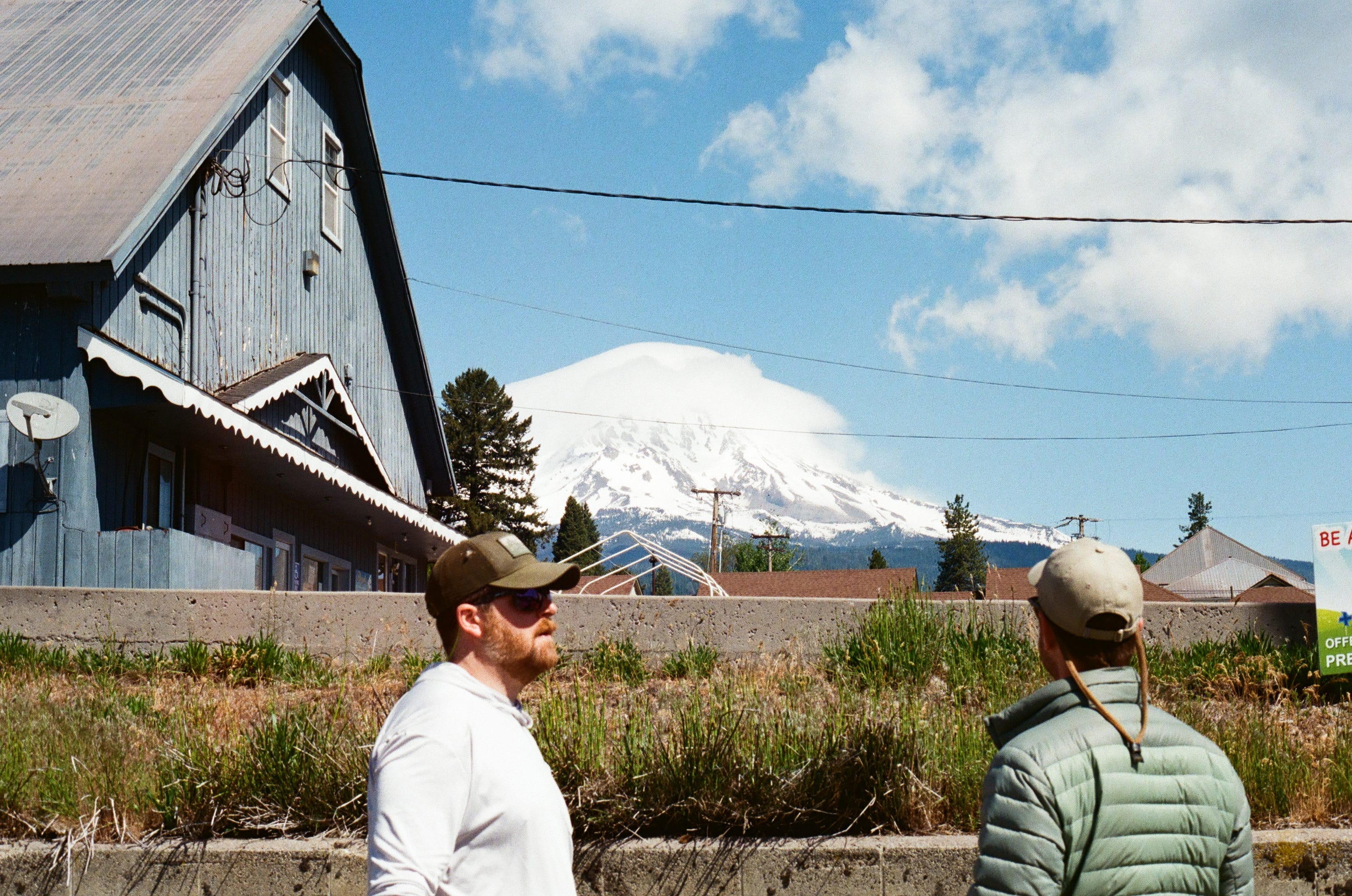
As if on cue, a lanky twenty-something punted open the glass door of the market with a bang, shaking me from my musings. He grinned at me as he lashed a case of Miller High Life to the bench seat of a motorbike with a bungee cord.
I’ve always found it easy to covet the lives of perfect strangers when they live in such beautiful places, and although I’d waited months to fly three thousand miles, drive five hours, and play hooky from work and life to make this trip a reality, I felt a pang of envy when he revved the engine toward some happy-hour hang. I imagined his carefree life, shaped by the easy confidence of someone who still believes, as I once did, that the future is limitless.
A second crash reset my focus on the rider, who was now standing over the smashed case lying in a widening pool of golden, frothy liquid. In the hangdog scene I spotted a glimmer of my former recklessness and tried not to take it as an omen.
Chris and Adam exited the market, and we tucked the last-minute provisions into the bed of the rental truck we’d picked up outside San Francisco Airport. Chris’s Subaru was packed to the gills, duffels lashed to the roof like a caravan camel. We looked ridiculous, a rolling sporting-goods store cutting through Bay Area traffic, and agreed that the cost of a rental was a small price for peace of mind on the steep dirt service road that would drop us into the McCloud River canyon.
Every switchback of the access road ushered us deeper into the canyon, further away from our lives, closer to ourselves, and toward the river we’d traveled all this way to explore. We were here to fish, sure, but none of us was gunning for trophies or even really cared if we caught any at all. The narrow aperture through which we once viewed fishing has widened, the frame around it delightfully blurred. Fishing has become the medium, a chance to be alive, present and together in pursuit, but not obsessed or obsessive or wrapped up in anything but the moment and its unfurling.
At the bottom of the canyon we found the AhDiNa campground and picked a spot close to the water. We unloaded the vehicles and began pitching camp, each savoring the magnitude of our escape and fighting the urge to rig up a rod and head to the water. Somewhere in the jigsaw of camping gear, fishing equipment, and cooking supplies, it occurred to me that each of us, in his own way, was grappling with change.
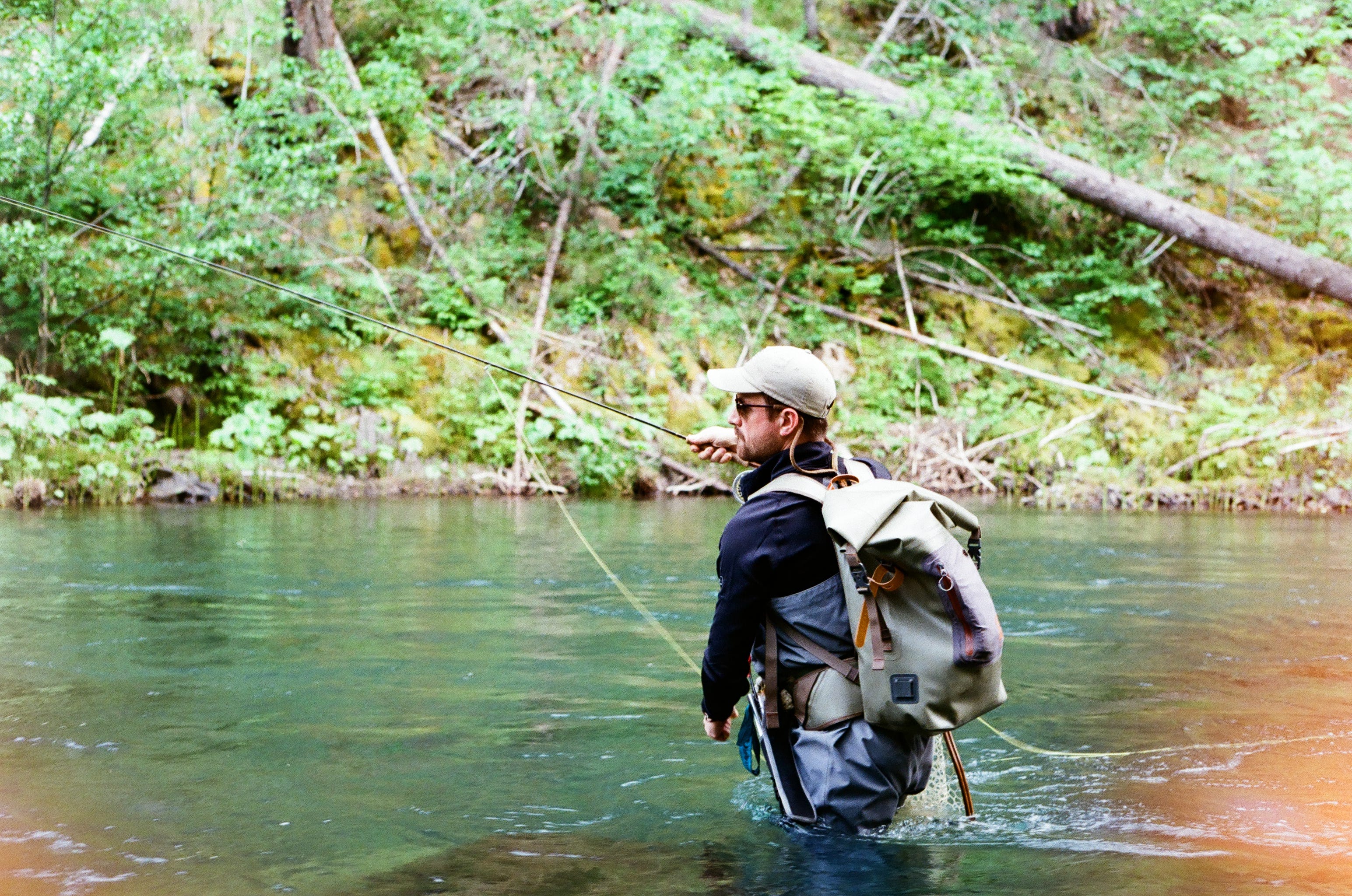
If the world is an upland field of opportunity, Adam is like a birddog weaving, nose down, with the wake in the grass the only indicator of where he’s going. But this trip was only a few months before the due date of his firstborn, this undoubtedly the last great getaway before fatherhood and all that comes with it. I wondered how it might change him, and to what extent that new responsibility would shift his priorities. I had no doubt his child would someday join us on these trips, and as that thought set in, I realized we were experiencing the last days of Adam 1.0, and a part of me already missed him.
Chris was raw from the sudden loss of a loved one, still piecing his world back together in the fog of grief. Being here with us was clearly hard for him, if only because he thought he had to hide his pain from us, or perhaps that his muted demeanor might somehow detract from the joy we always gained from being in his orbit.
Death is the great magnifier. It shows us what remains when the people we love are taken away. But I’ve never experienced losing someone unexpectedly, and I can only imagine how disorienting it is. I watched him paw through the back of his Subaru and hoped that this trip — the actualization of years of planning on his part— might help him feel more like himself, even for a little while.
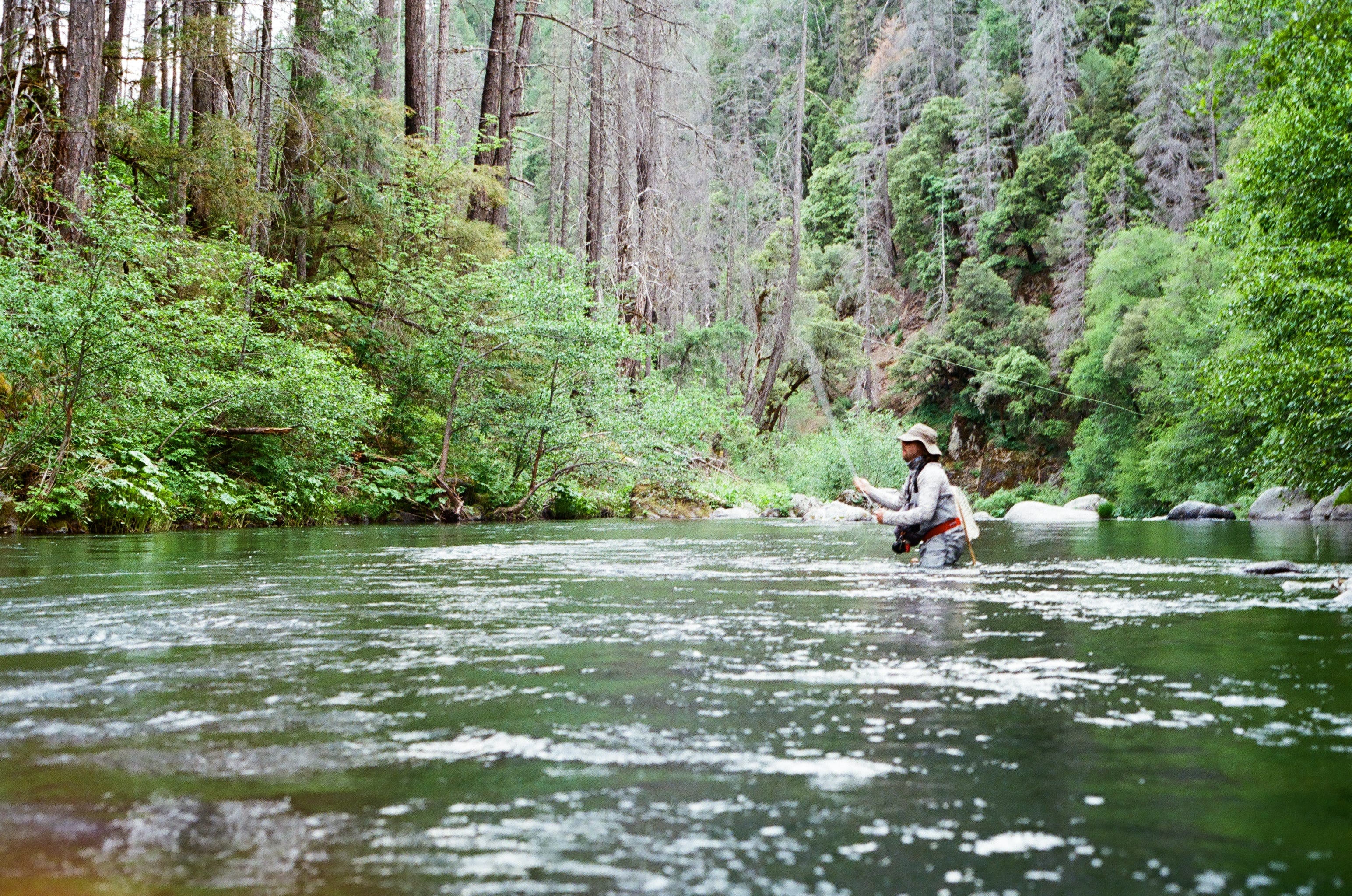
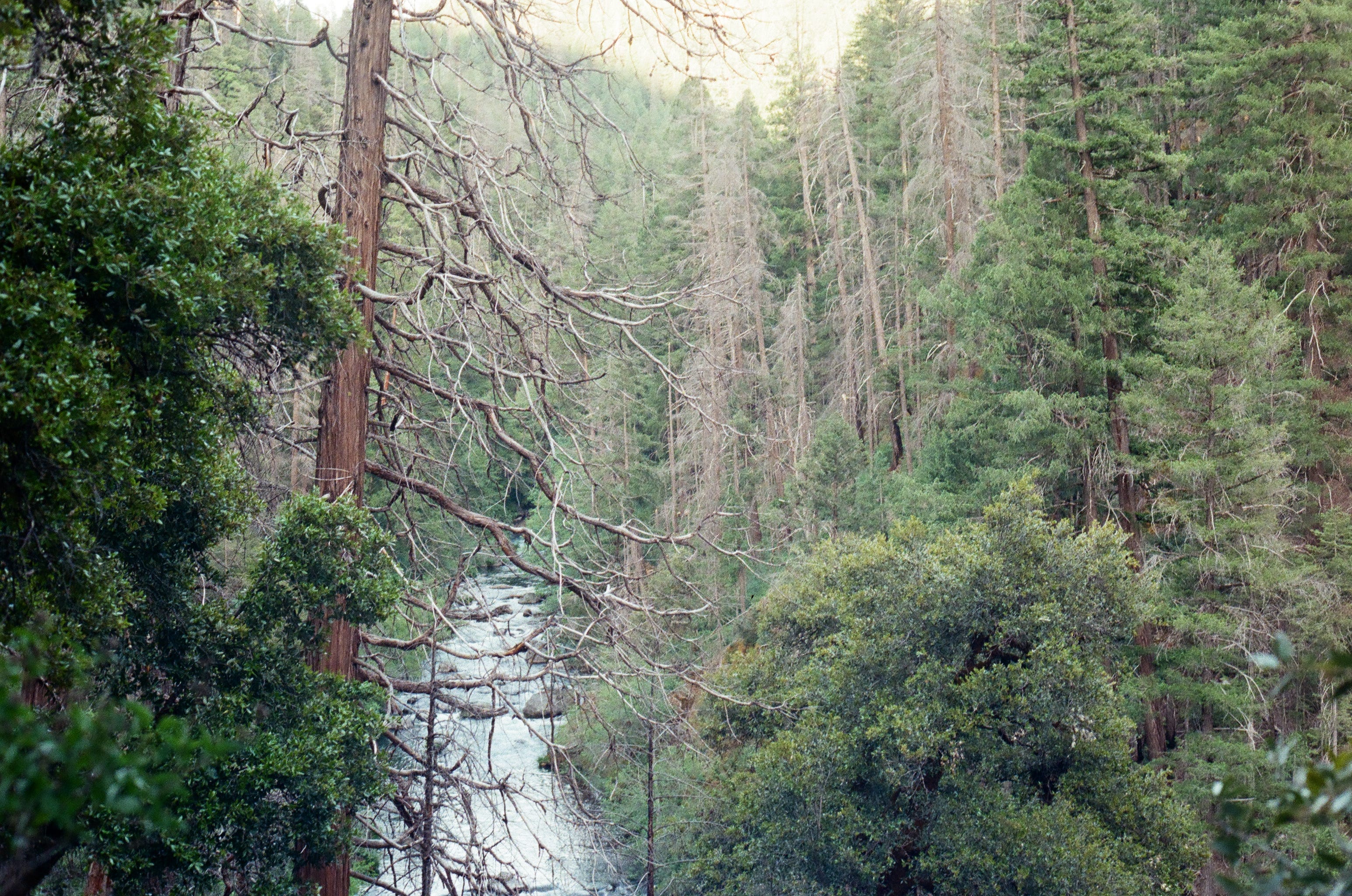
Some rivers are grand, poised in postcard vistas that tug the heartstrings of the modern human like the memory of a former lover. Others beckon like pristine oases to the nature-starved traveler seeking satisfaction in their simple, incomparable beauty. Down in the canyon, the McCloud runs wild and primeval, unbothered by its secluded and hardscrabble hermitage. Cliffs of limestone and basalt steppes foil even the boldest anglers, leaving stretches of its blue-green water unreachable and shrouded in ponderosa pines and stalwart oaks; a river unto itself.
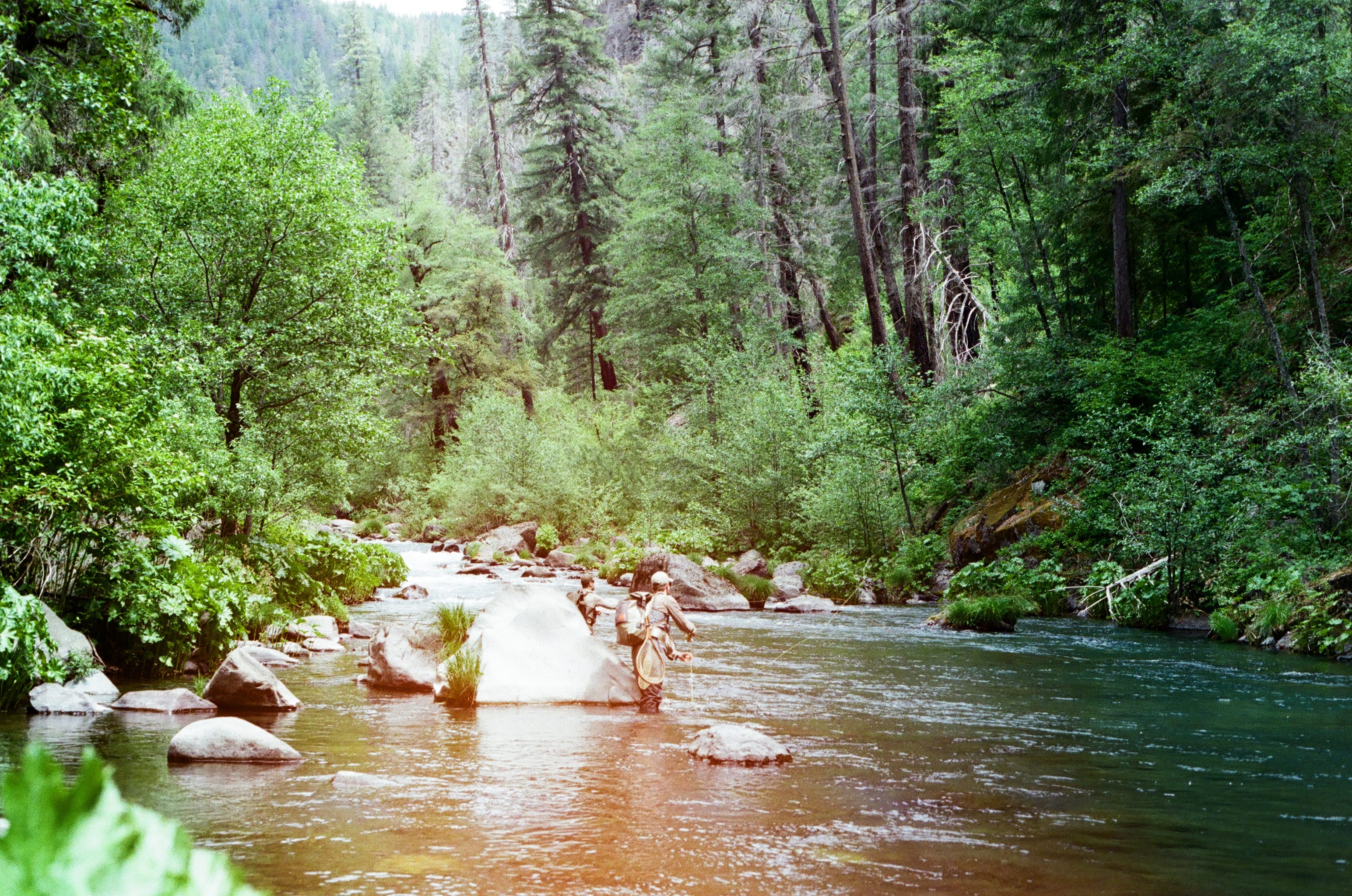
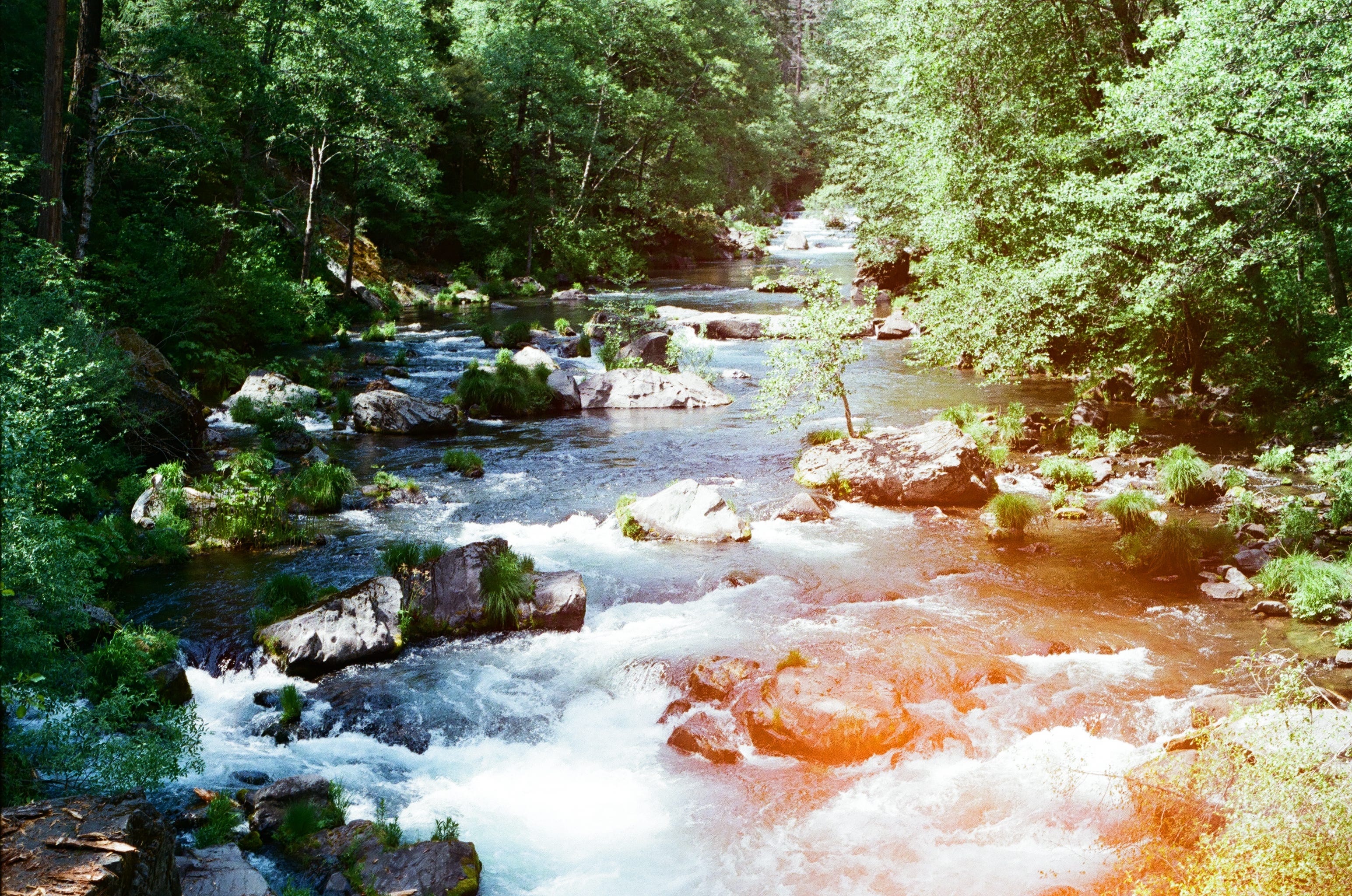
And like most beautiful rivers, the McCloud is a technical fishery. Braided, meandering currents make long drifts impractical, and nearly any interpretation of an overhead cast will land your backcast in a tree. Wading is also tricky; the ancient lava over which the river runs is slick and prone to sudden changes in depth. Much of the river is rather narrow, the far bank reachable with a well-executed roll cast, but here the current is strong and the water cold.
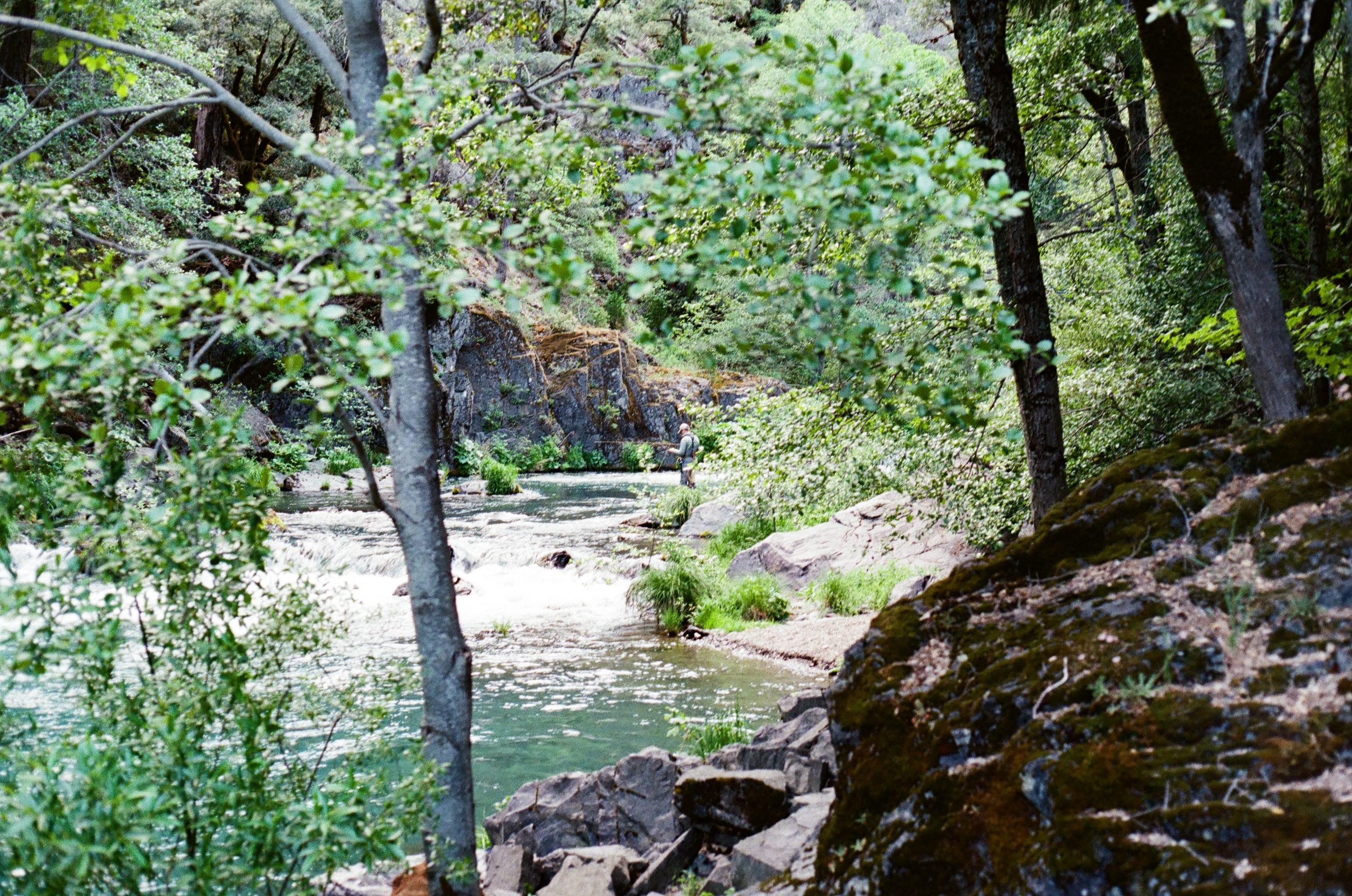
My field notes from our first day suggest we’d collectively brought ten fish to hand by lunch on a mix of nymphs and dry flies. “It is rare,” I wrote, “to have such a productive and memorable first day on a foreign river, although not entirely surprising given our willingness to bushwhack through tangled and rocky paths, wade across slippery and fast sections of water, and work hard and methodically through runs and bouldery pocket water to find fish.” That first night we fell asleep to the sound of the river and the smell of a campfire and sausages clinging to our skin.
There are few rivers more integral to modern American fly fishing than the McCloud River. By the mid-1800s the majority of East Coast rivers, the iconic natural laboratories of Theodore Gordon, were showing the impacts of the wool trade, logging, and dams. Native brook trout and Atlantic salmon were choked out, and by the 1870s, most of New England had embraced fish culture-based restoration efforts.
In 1874, the first eggs were harvested from McCloud River rainbows and transported eastward, beginning a longstanding practice of planting rainbow trout in rivers across the United States and abroad. Rainbows, most originating from the McCloud, took root and helped keep the sport alive through the impacts of industrial expansion. Every angler that has hooked a rainbow trout, from Maine to Michigan, Argentina to Australia, owes a debt of gratitude to the mighty McCloud River and the unique genetics that it fostered.
I thought about these remarkable fish as we hiked east along the Pacific Crest Trail from AhDiNa our second day. From that vantage point, the McCloud seemed immortal, impervious to change. Ironic, perhaps, that the trout that evolved in such a rugged and remarkable environment have become ubiquitous to the extent of being iconic, and sadly, a commodity.
It is, perhaps, because of their ubiquity that few anglers target rainbow trout the way they might a brown or a brook trout. In some places, like the Lamar River watershed in Yellowstone, they’ve been relegated to an invasive pest undermining native cutthroat populations, and are sentenced to instant death if caught. The rainbow trout is undoubtedly the most well-traveled trout, but the cost is a reputation tangled up with our modern notions of native fish, conservation, and more than a century of agricultural fisheries management, the downstream effects of which are still being studied.
It’s easy to ignore the fact that McCloud River rainbows were selected precisely because of their hardy nature refined over tens of thousands of years in these remote and austere conditions. And while it may be fashionable to look down our noses at rainbow trout, something of which I was guilty for years, when you consider how successful these fierce McCloud River fish have been at proliferating in new and different environments, it’s hard not to be amazed at their ability to adapt.
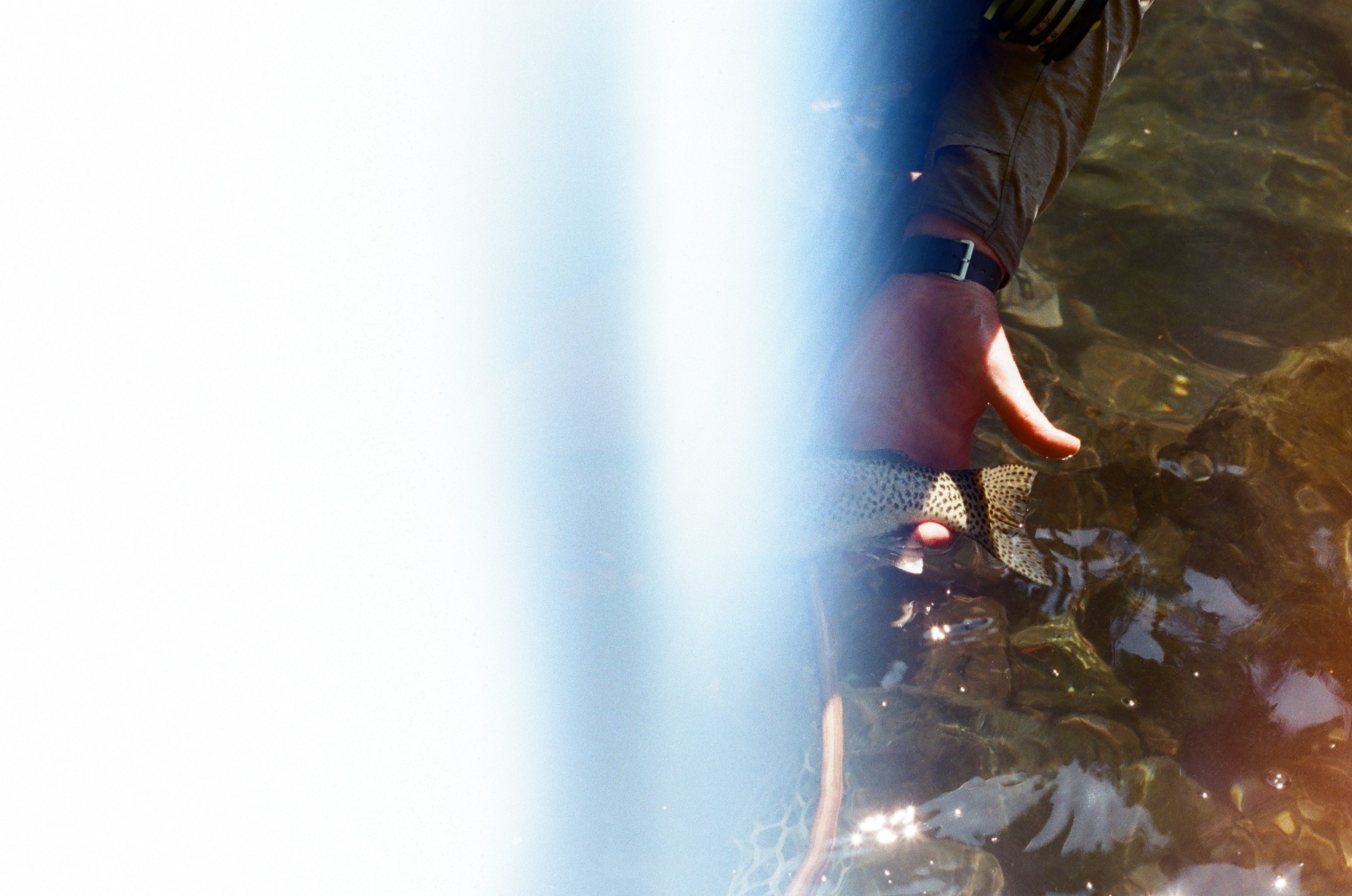
Of all the rainbow trout I landed that trip, the aggressive sow that tackled my size 10 stimulator that afternoon was the prototypical McCloud River rainbow. It muscled between current lines, darted toward submerged timber, and managed several impressive leaps before succumbing to my five weight rod and an armful of side pressure. This fish was to the average stocked rainbow what a jaguar is a housecat.
Chris clicked away, capturing images of the fight and the fish we were sure would speak volumes about these storied waters and the magnificent trout that inhabit them. But weeks later, when he developed the roll, the whole thing came back ruined by a wandering light leak. Every frame was scalded and spectral, as if the sun itself had tried to erase the evidence of what we’d seen.
Hoofing our way back along the PCT toward camp that evening, I was forced to confront the change I’d been skirting all trip: I’m getting older. Not catastrophically, just the quiet, predictable kind of aging that is starting to show up more and more in the margins. Proof that my body is beginning to reject the kind of abuse I once shrugged off.
As I plodded along, I found myself performing a quiet calculation: How many more trips like this can I reasonably muster? Will I ever reach the other rugged rivers that fill my daydreams? When does this kind of fly fishing begin to slip out of reach?
On our final day, we ventured downstream to the section of conservancy water within the Kerry Landreth Preserve. This section, several miles of twisting runs and aquamarine drop pools, is limited to a maximum of ten anglers per day via a tag system. Half can be secured online, while the other is reserved for walk-ins, made available daily around 7AM. We found the little ranger cabin well before 6:30 and were pleased when we claimed the first three walk-in tags.
There is an unrivaled sense of ease in knowing you have more water ahead of you than you can possibly fish, and we delighted in stopping at only the best-looking spots. We retained only a vague sense of where we were, or how far we’d fished and occasionally pinched at the image I’d snapped that morning of the cartoonish, illustrated map posted at the ranger station with my signal-less phone.
Evening comes early in the canyon, and we welcomed the chance to replace the heavily weighted nymph rigs with fresh monofilament leaders, and dig the dry fly boxes from the bottoms of our packs. Instinct — and some recent experience — told us to wait and watch for rises, so we did, quietly pondering patterns and squinting skyward at hatching insects silhouetted against the diffused aura of twilight.
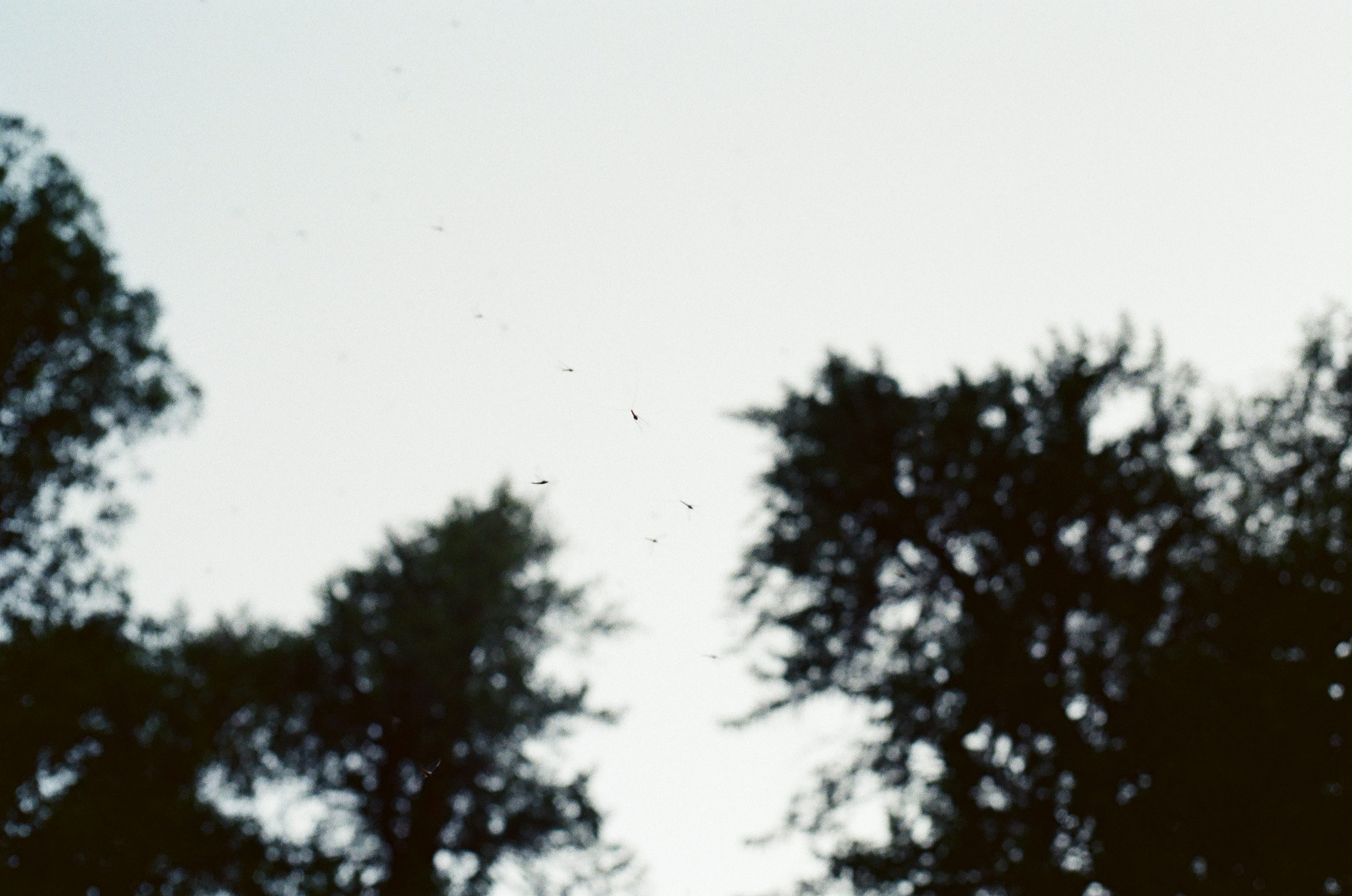
The rainbow that sipped Adam’s sparse emerger seemed more offended at having been deceived than at being hooked. It dropped into the deeper seam and tore downstream, drawing the fine tippet taut. Adam played it with the quiet respect of someone who recognized that the subtle, dimpled rise he’d targeted belonged to a full-grown fish.
We hadn’t come to the McCloud in search of trophy rainbows, but Adam had found one; a large wild McCloud River fish. Chris fidgeted with his camera as Adam brought it deftly to the net, coaxing the lens to embrace every photon of fading light. In the end, all we could do was marvel at its muscular tawny green flank, bold black spots, and the rusty band running down its lateral line. In its vermiculations lay a private message, an eons-old secret written in spots and scales that felt, in that moment, meant for us alone.
Watching it swim back into the darkening pool, I felt the first quiet hint of the lesson the river had been trying to teach me all week, and tipped my hat to the mighty, indefatigable, world-traveling McCloud River rainbow. Change comes for all of us eventually; the resilient ones learn to meet it with a little grit and a kick of the tail.
What a fabulous essay. Change does indeed come for us all. (I for one love the ghost fish, but then again I was there to see that beauty. Whoops!)
Proud to be part of this excellent piece. Thank you Jake.
And if you do visit the McCloud, be careful — she's tough. And make sure you visit Ted Fay's fly shop.
Beautiful piece and beautiful pictures, light leak and all.