



Quartermaster posts usually begin the same way: I stumble across something on eBay or Facebook Marketplace, go down a rabbit hole, and discover something I think is worth sharing. Sometimes it ends with a reel on my desk that I didn’t know I was missing. Over time, that habit has turned into a quiet pile of rods and reels acquired out of curiosity, nostalgia, and a general inability to scroll past good engineering when I see it.
The end of the year is a good time to take stock. And in doing so, I’ve realized that the pile has grown a little too large. So this time, instead of sending you outward, I’m opening my own collection.
Each of these Orvis reels comes from an era when fly reels were built to do a job — unremarkably, repeatedly, and well. They aren’t particularly rare or precious. They’re just right. The kind of reels that balance a rod properly, reward restraint, and bring a quiet sense of style to your pursuit. Too good to sit on a shelf collecting dust.
These reels deserve to see action. Consider this an invitation to put one back on the water where it belongs.

Late 90’s Orvis Battenkill 5/6 - Made in England
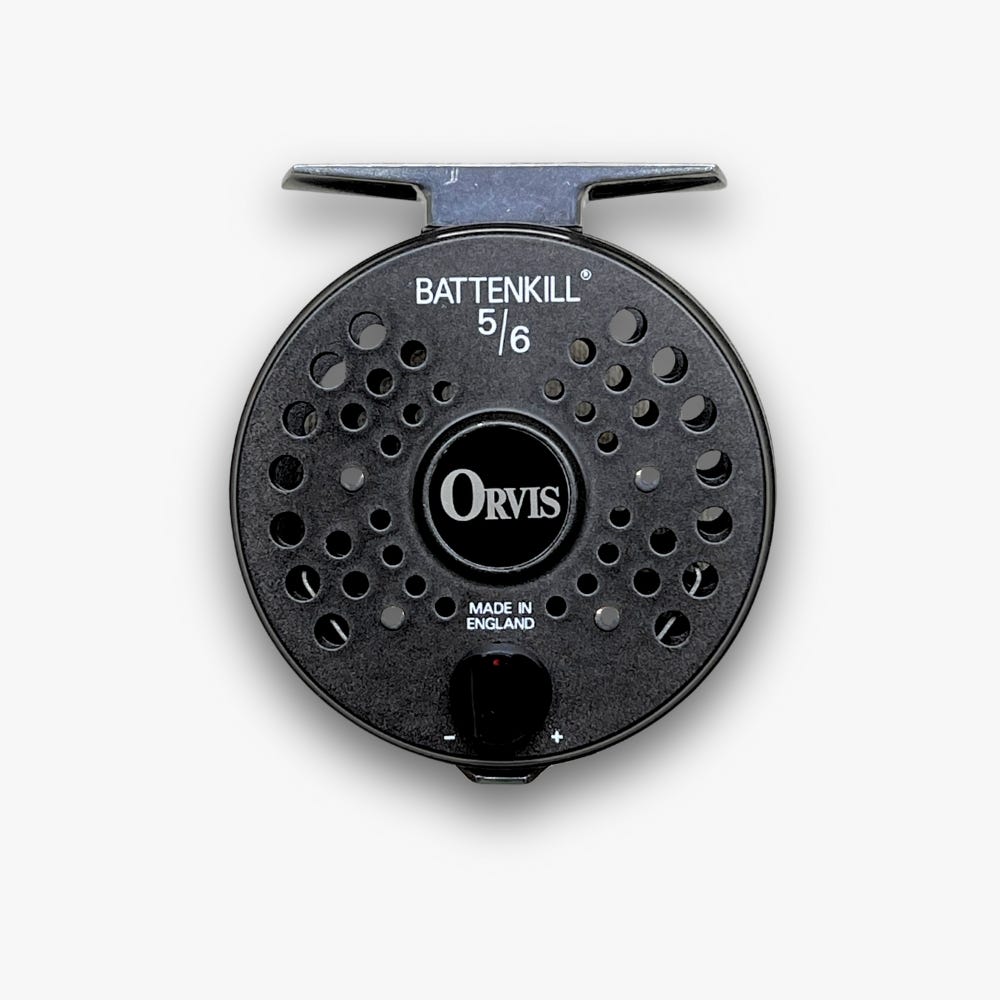
No reel speaks to a brand’s heritage more than the Orvis Battenkill. Originally introduced in the 1960s, the Battenkill line has served tirelessly as a simple workhorse model with robust build quality and classic good looks. And by the 1990s, the Battenkill was a household name among anglers looking for reliability at an approachable price point.
This specific Battenkill 5/6 hails from the late 1990s, when Orvis was still using the British Fly Reel company for production of their core models. During this time, the Battenkill was crafted from cast high-silicone aluminum — a process used widely in automotive and aeronautical manufacturing — and finished in a dark gray corrosion-resistant coating.


The unpretentious finish helps the chrome plating on the line guard, reel foot, and machined counterweight pop, giving this reel an iconic look that pairs well with everything from bamboo to fiberglass.
This era of BFR-made Orvis Battenkills is really compelling. More and more, I find myself fishing click-and-pawl reels, and am drawn to models that have adjustable tensioners, as is found in this model. Switching the retrieve direction is straightforward and requires no special tools: simply reverse the direction of the pawls. (The included original pamphlet has a simple diagram for future reference.)
I don’t think you could classify a ‘90s Battenkill as a collectible reel, but a quick scan of eBay reveals that finding one in top condition is hard. I attribute this to their all-around utility and reliability; Battenkills were fished hard and put away wet.
This one is as close to perfect as I’ve seen; I don’t think it’s even had line on it. Other than the smallest of scratches on the reel foot and a little discoloration around the base of the spindle, this one is like new. It came into my possession with the pictured green and beige Orvis zipper case. I have no idea if this is correct, but it’s clean, the zipper works, and it feels generally era-appropriate.
Orvis BBS II - Made in England
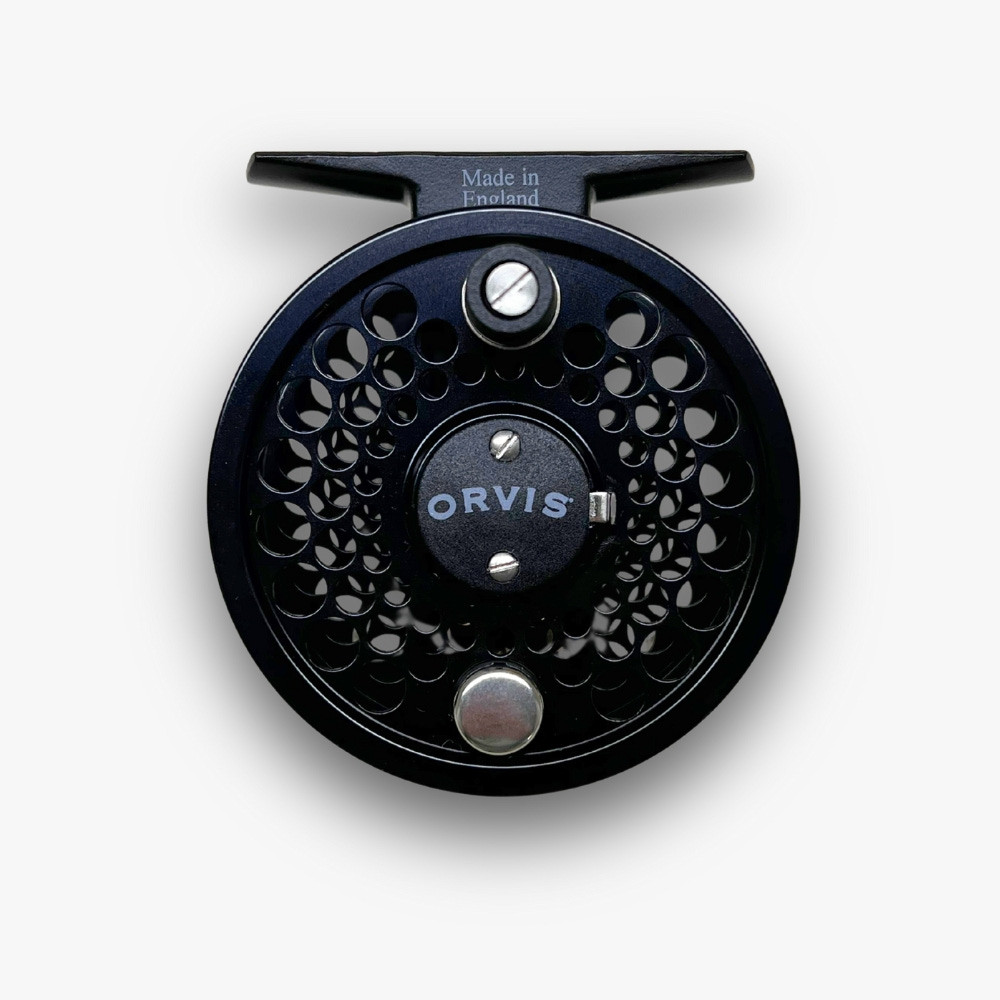
BBS stands for Battenkill Bar Stock. A no-nonsense nomenclature for a no-nonsense reel that carried with it a reputation for being rugged, versatile, and reliable. The BBS line achieved this by its blend of classic and modern design and manufacturing. And while its production run was relatively short lived, the BBS series has its die-hard fans.
The BBS was milled from aerospace-grade 6262-T6 aluminum, an alloy which sits in the sweet spot between hardness and machinability. This gave the BBS significantly higher tolerances than other reels from the era while maintaining a hardy, dent-resistant build. Machined aluminum also meant the BBS was light — the BBS II clocks in at just 3.5 ounces (unlined) — while still offering ample line capacity.
One of the most impressive elements of the BBS series was the deeply adjustable click drag achieved through the tensioning knob on the main plate. While it wouldn’t stop an ornery fish from running, it does put a surprising amount of pressure on the line and gives off a pleasingly bright but slightly muted sound when it does. Changing the retrieve direction is as simple as lifting the central disc and flipping it over. No tools required.
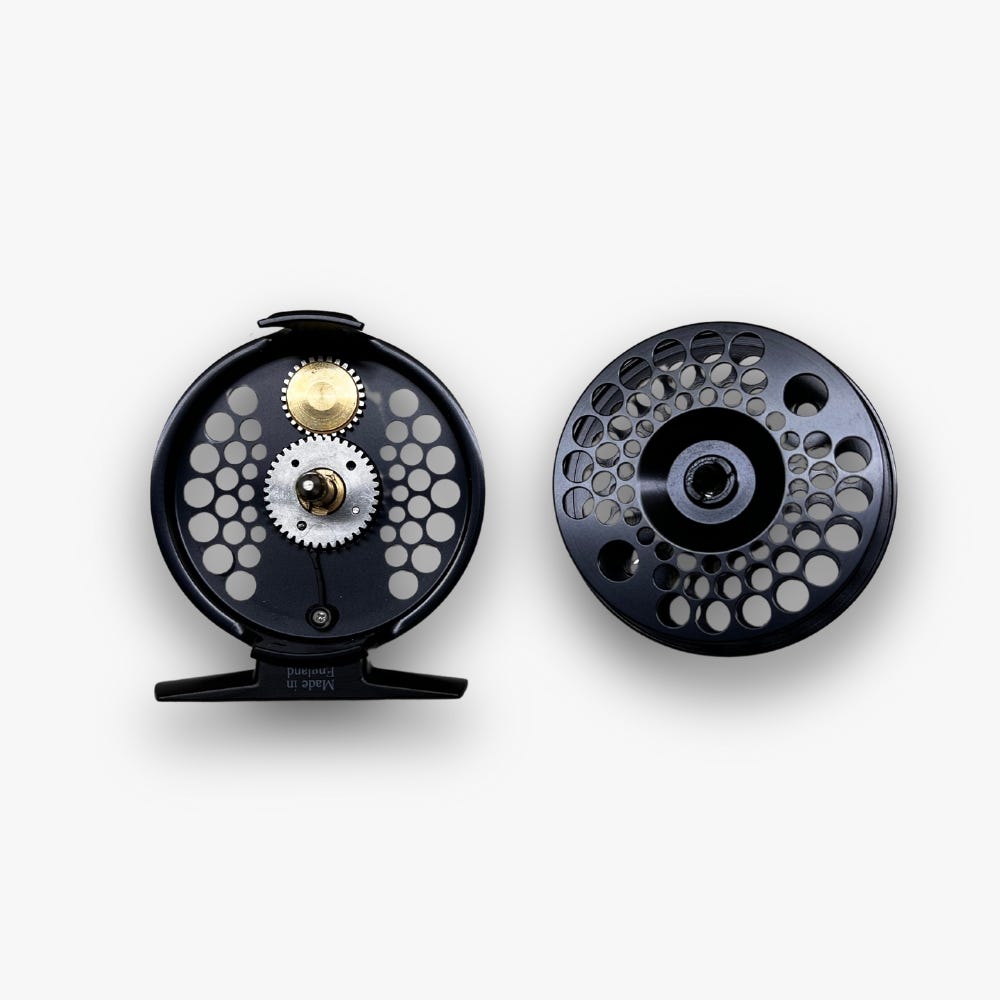
Originally introduced in the late 1990s, the BBS line was manufactured in England for only a handful of years before Orvis purchased and later shuttered the British Fly Reel company in 2004, making these jack-of-all-trade reels a special footnote in fly fishing history.
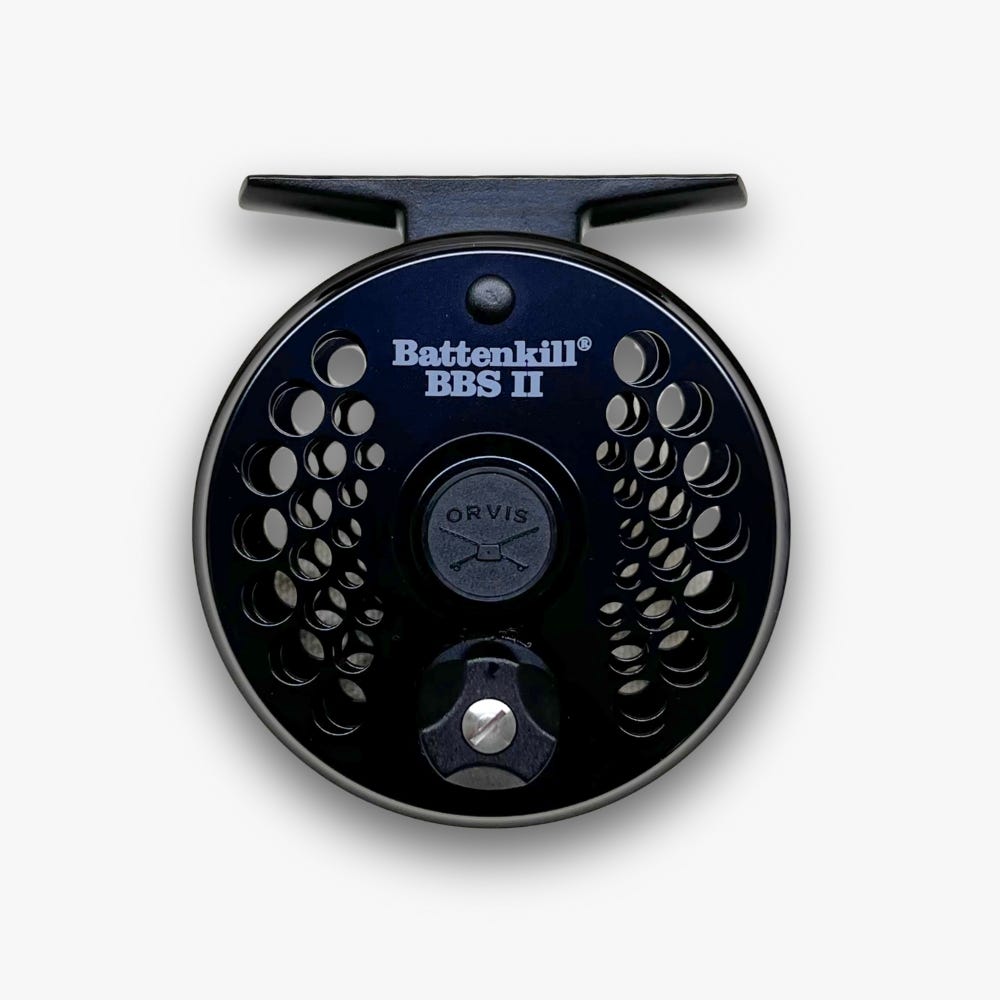
This all-black version is in exceptional condition and appears as though it has never been fished. Examples in like-new condition are unsurprisingly difficult to locate as the BBS was a workhorse, sought after by devoted anglers, and most others I’ve seen show it.
Orvis Madison IV - Made in England
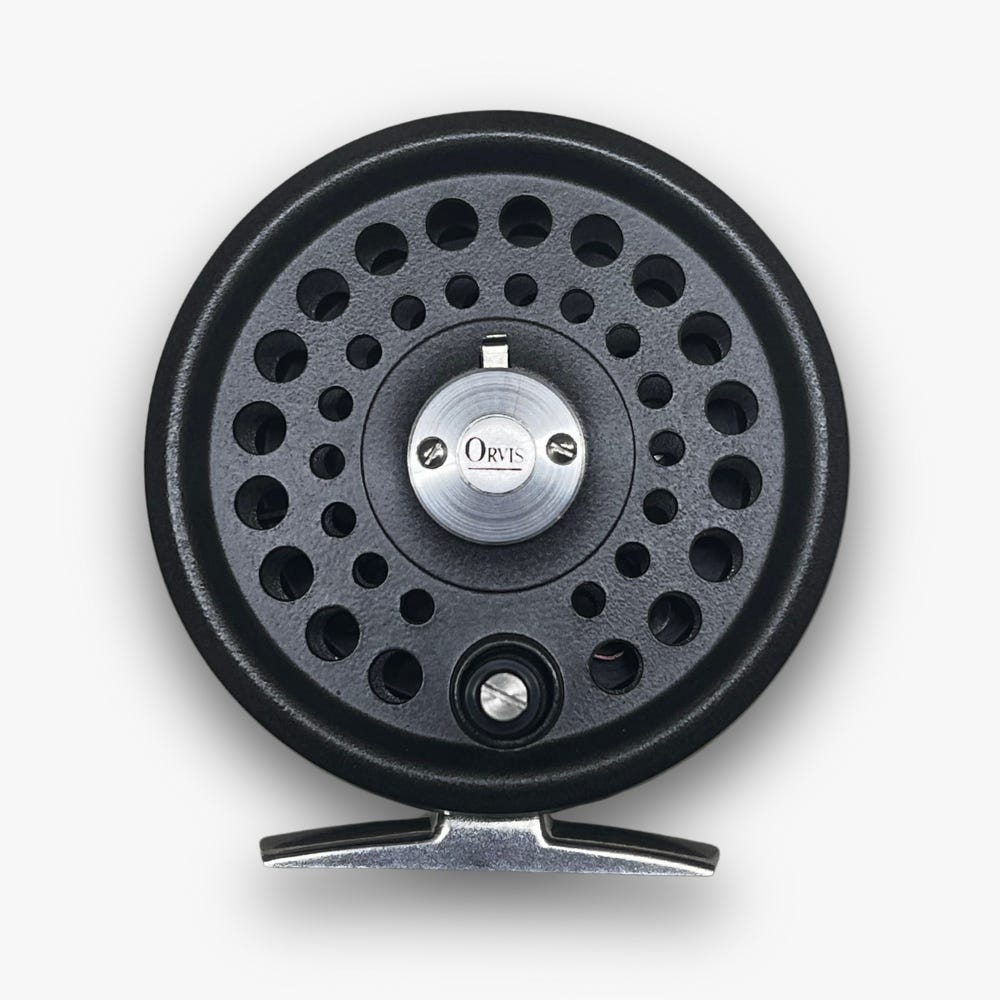
I’m a big fan of underdogs, especially when they punch well above their weight class, and the Orvis Madison is one such item.
Originally produced for Orvis in the 1970s by Shakespeare, who, having had acquired Pfleuger in the late 1960s, leaned on the widely popular Medalist as design inspiration. Some old forum threads note that for a time, the spools of the two models were interchangeable, suggesting that the Madison was manufactured to nearly identical proportions.
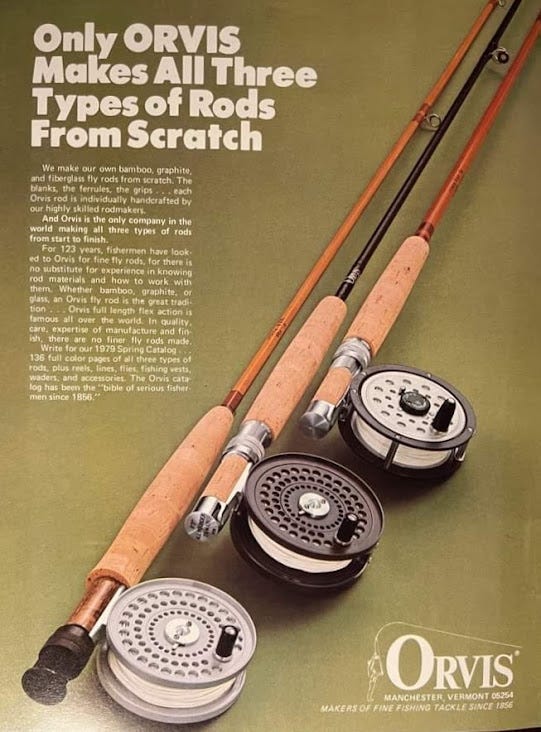
The Madison always occupied an entry-level station at Orvis, to such a degree that over time, concerted efforts were made to make production even cheaper. By the mid-1980s, Orvis had dumped Shakespeare’s American production facilities in favor of BFR in Britain, a move that lasted until the line was phased out altogether in the ‘90s.


This example hails from that final era of production, and you can see Orvis’ attempts at cost-savings throughout. The reel was cast, not machined, and the guts of the click-and-pawl were fabricated from plastic. Even the central medallion bearing the model name was simplified to a printed sticker.
And yet, as a reel, it still performs. Last year, while fishing Yellowstone National Park, an angling buddy used his grandfather’s Madison reel on its namesake river just outside the park. Hearing its distinctly bright clicker fire off as he landed spunky trout was the best kind of time travel, and made me appreciate how little a reel actually needs to do.
This example is in like-new condition and comes with its original paperwork.
Orvis Superfine CFO II Disc - Made in England
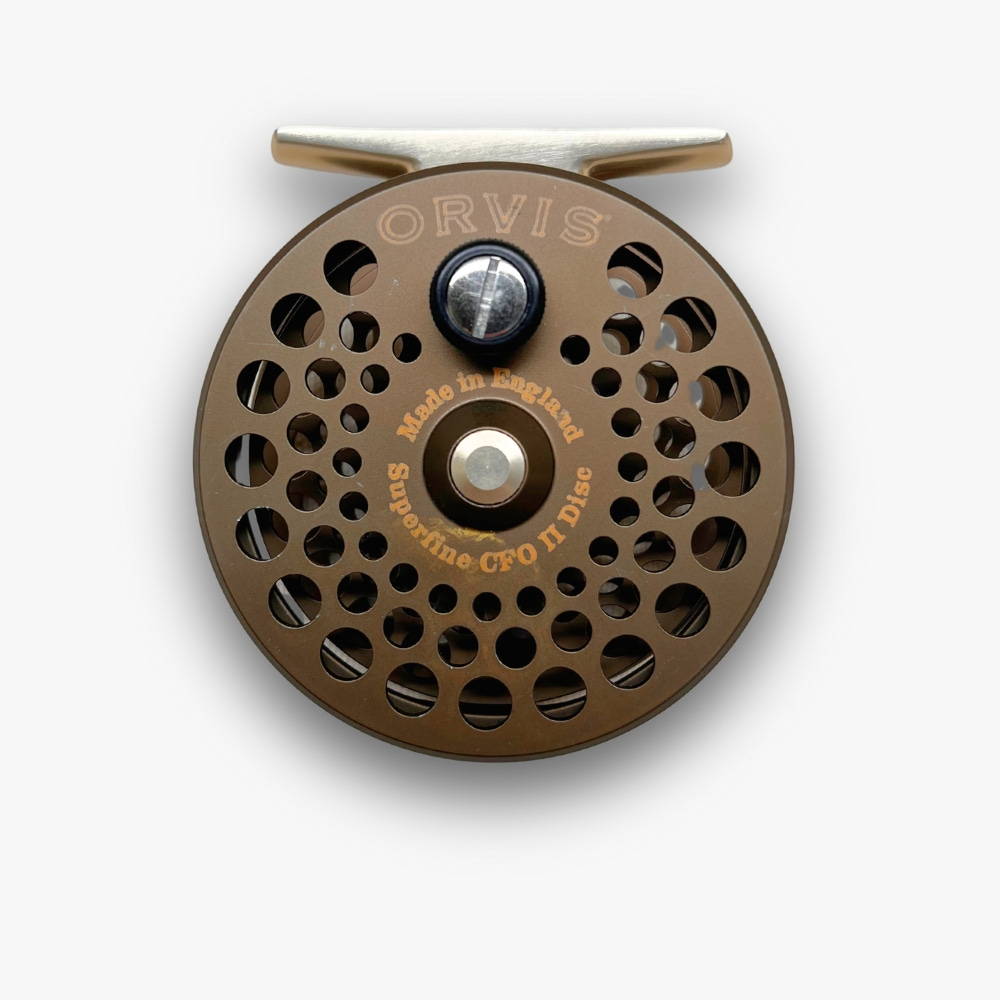
In 1874, Charles Orvis revolutionized the world of fly fishing with the creation of the ventilated fly reel, setting the standard for modern fly fishing equipment. Nearly a century later, Orvis tapped legendary reel maker Stan Bogdan to design a new reel in homage to the brand’s famous founder. That original CFO – for Charles F. Orvis — was manufactured by Hardy in England and introduced in the Orvis Christmas catalog in 1971.
Since its inception, the CFO has had many iterations. While Hardy made the first run, production was quickly moved to the British Fly Reel company which was responsible for the majority of the CFO manufacturing until 2004 when BFR was dismantled by Orvis.


This reel hails from the CFO’s final runs of British manufacturing, likely dating to the early aughts. A sought after model in its own right, this CFO II is finished in a gorgeous bronze and topped with a rosewood knob, an expression that saw limited production at BFR relative to the more iconic black and steel versions.
CFOs of this era also represent the last of the offset drag system, a design that began and ended with Orvis. This drag system is finely tuned, and allows for more drag pressure than is likely necessary for this small, standard-arbor reel. Still, the counterbalanced spool and rear-mounted drag knob, combined with its fetching color and classic good looks, gives this British-made reel an air of sophistication that is lost in the modern era.
This one’s in excellent condition with only a couple of imperfections on the knob side of the spool and a small scuff near the hub on the base plate. It comes with an era-appropriate Orvis zipper case.
I want them all lol.