


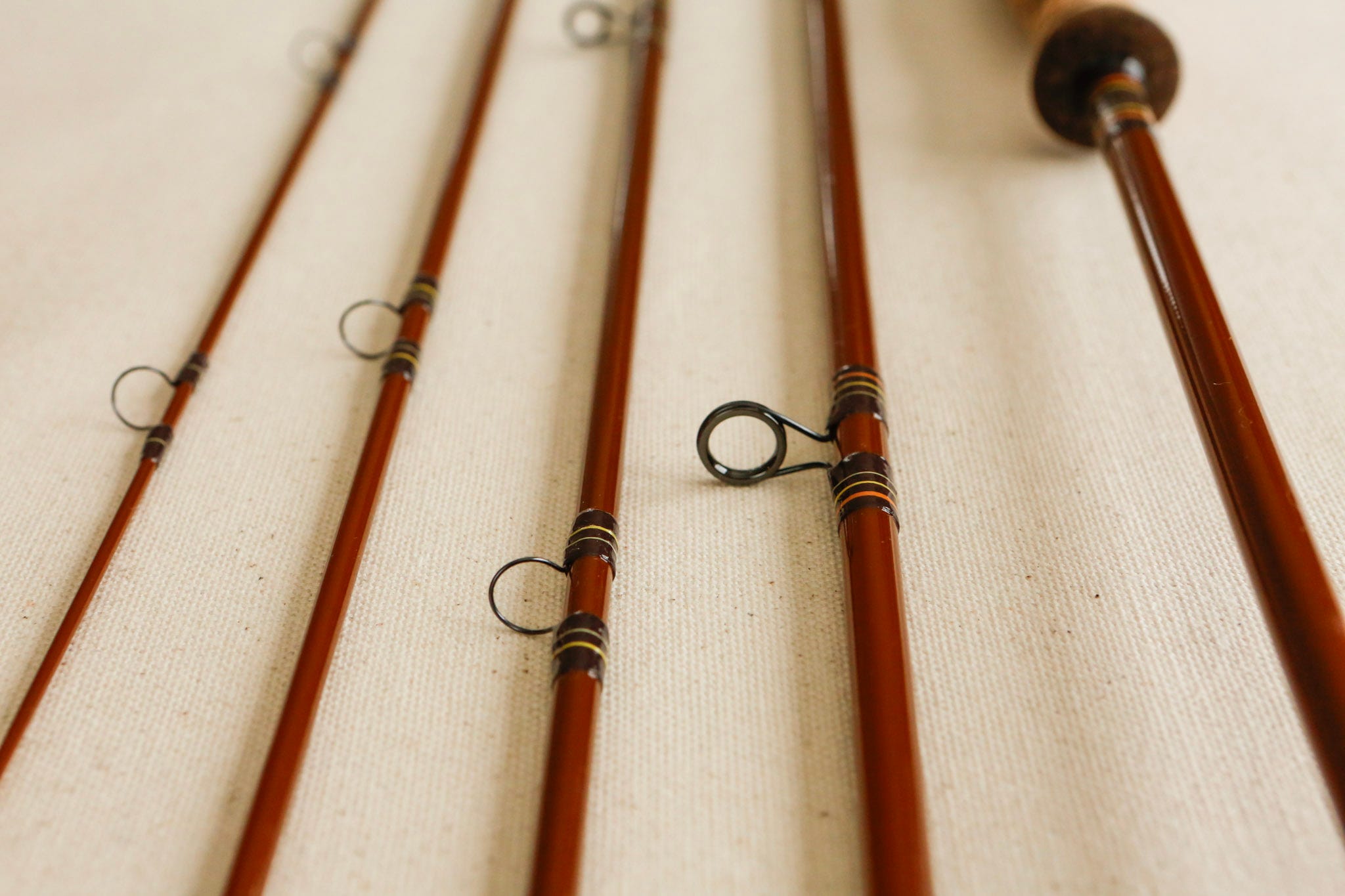
It’s been nearly nine months since I started building a five-piece fiberglass travel rod at the small work bench in the corner of my office. I called the project Codename Bronco.
When I began last March, I had very little experience building rods. What I did have was a clear vision, enough confidence to get myself into trouble, and the stubborn belief that if I moved slowly and paid attention, the thing would eventually take shape.
I made the project harder by trying to document it as I went: filming, photographing, and writing through each step. Sitting here now, with the rod finished, I’m still not sure which part of the process demanded more patience: building the rod, or learning how to tell its story without getting in the way of the work.
On Waiting
Newer Hookswain readers may not have seen the early updates. The last time I wrote about Codename Bronco was April of last year. At the time, I had chosen the blank for its travel-friendly dimensions; a 7’6” four-weight, broken into five pieces that pack neatly into a 20-inch tube. The plan was to complete the rod in time to take it with me on a trip to Kosovo and Albania, where I hoped to fish for small wild trout in the mountains.
That didn’t happen.
Life intervened. Travel with family took priority. The June heat made fishing impractical anyway. And when I returned home, a long list of house projects filled whatever creative margin remained. I spent the summer racing Vermont’s first snowfall, finishing just in time.
On rainy days when outside work stalled, or late at night when the house was quiet and work emails were answered, I returned to the bench. Completing the rod gnawed at me; taking months to complete, not weeks.
The Shitty First Draft
Writers talk about the “shitty first draft”, the necessary, imperfect version that gets the idea out of your head and onto the page. I’ve always struggled with that concept. I want things to match the picture in my mind immediately. After what feels like a lifetime of writing, I am beginning to appreciate the value of roughness, and how, with patience, it transforms into something you never could have imagined in the first place.
Codename Bronco was an exercise in applying that concept to craft.
At the outset of this build I decided I wanted to try and tough it out on my own as much as possible, stumbling through mistakes without the support of more skilled craftsman to guide me. Thought, I wasn’t totally alone. When I was confused or unsure, I opened the pages of Fiberglass Rod Making leaning on Clemens’ schematics and diagrams to help me along. When I was distraught at my lack of progress, or felt that my work didn’t meet my own standards, Clemens seemed to be leaning over my shoulder, offering wisdom posthumously through the page.
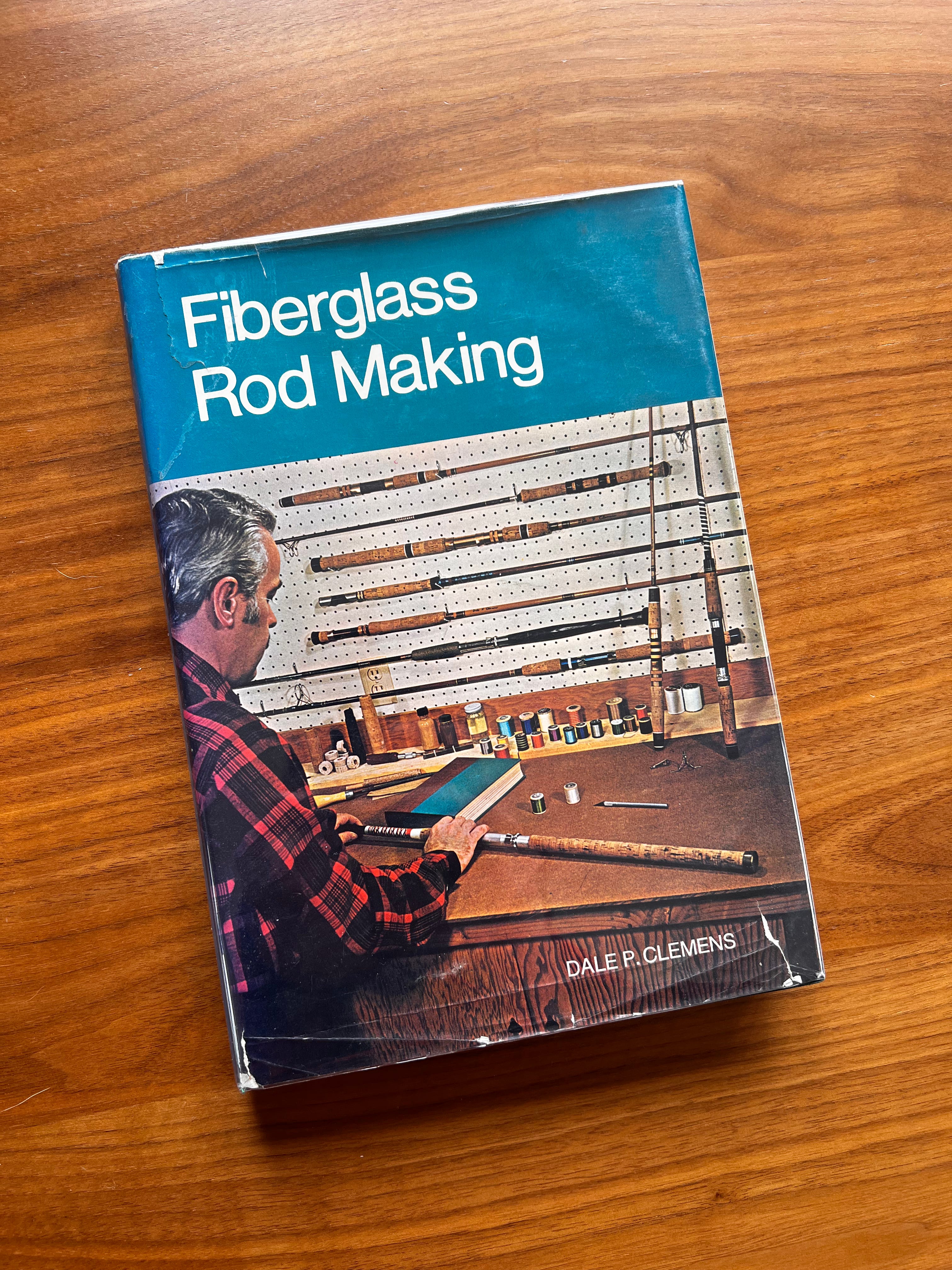
“If I, who am an absolute bumbler with tools, can build custom fishing rods, I am sure that you — armed with what I have learned over the years and put into this book — can quickly master the art of rod building.” Dale P. Clemens
Much like writing a good story, things gradually came together, the spirit of the rod revealed in each swipe of sandpaper, turn of thread, and daub of varnish.
The Work
My previous updates covered the process of turning the reel seat spacer, gluing up the reel seat hardware, and fitting and gluing the cork for the grip. Once that was completed, I turned my attention to placing and wrapping the guides.
Guide spacing is one of those invisible decisions that determines how a rod feels long before it ever sees water. I relied on a spacing diagram from Fiberglass Rod Making by Dale P. Clemens, adapting his measurements to accommodate the ferrules of a five-piece blank. Blue painter’s tape marked each position. Adjustments were made by eye, then adjusted again.
In the end, the rod settled into its shape: two stripping guides, six snake guides, and a tip top. Each was taped in place, aligned, and wrapped.
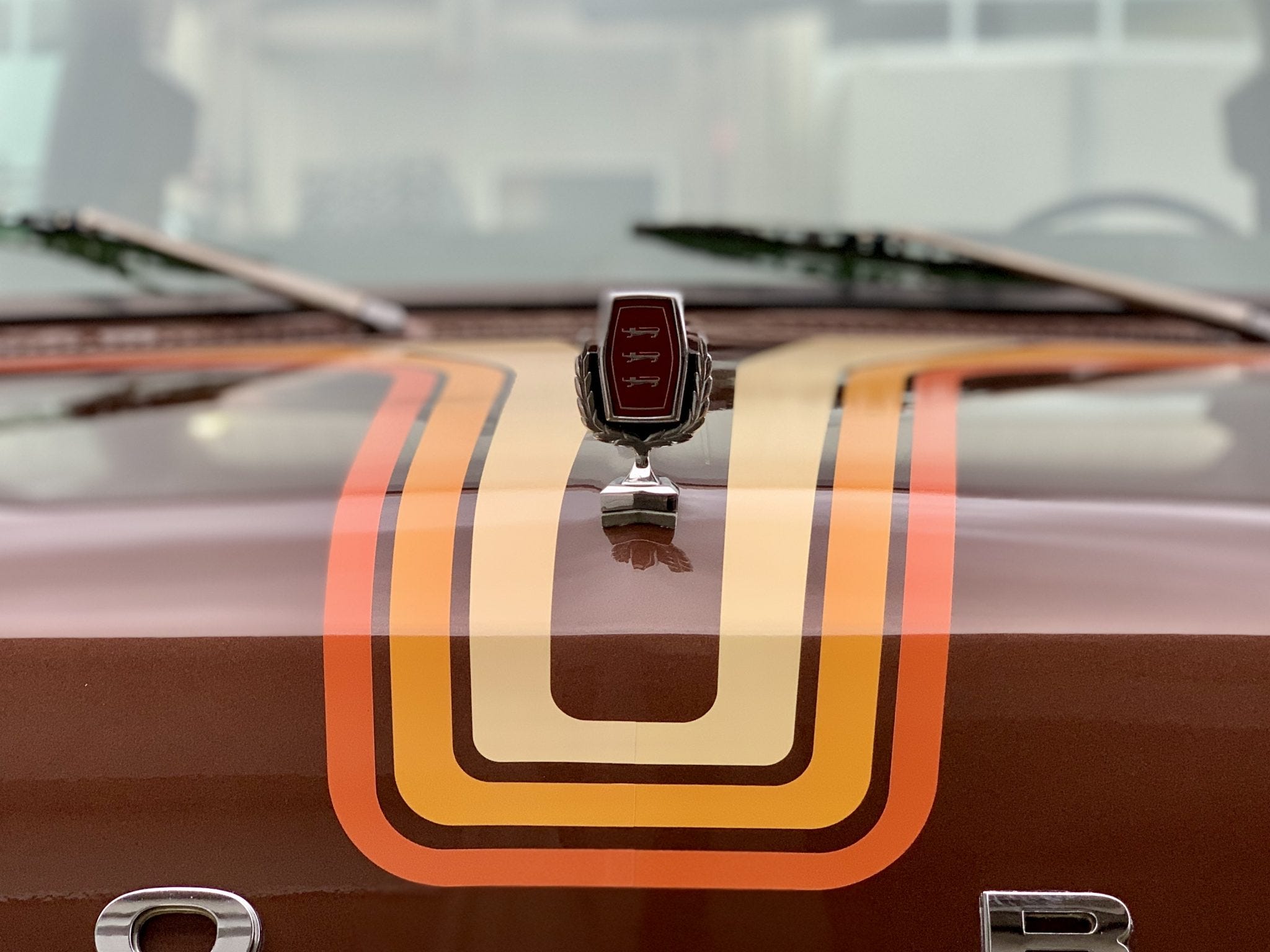
The design language was lifted from a 1970s Ford Bronco I came across early in the project. Its dark brown panels broken by a tri-colored stripe felt unapologetically of its time and perfect for a funky little fiberglass rod. Translating that motif onto a fly rod meant inlay wraps, stepped carefully and intentionally along the blank.
The stripping guides received the most attention: three inlays—orange, yellow, and cream—nested into brown base wraps. As the rod tapered, the design simplified. Three inlays became two, and then one. The ferrules were wrapped in brown with a single cream accent to keep the visual weight balanced.
By the time I finished, I had completed thirty-five separate inlay wraps.
The further up the blank I went, the harder it became. The tip section, willowy and fragile, demanded steady hands and multiple retries. My fishing buddies like to joke that if there’s a hard way to do something, I’ll find it. Codename Bronco confirmed that suspicion.
The Second Craft
Somewhere along the way, it became clear that I wasn’t just building a rod. I was also learning how to record the work without interrupting it. Those are two different disciplines, and they don’t always cooperate.
When I tried to document everything in real time, the work slowed and my focus fractured. Camera angles mattered. Lighting mattered. Whether I remembered to hit record mattered. The bench stopped being a place of quiet concentration and became a stage, even when no one was watching.
At first, I filmed the build with an iPhone, balanced on a travel tripod or held in place with duct tape. The footage was bad. I blocked the frame with my head. Focus drifted. Important moments were missed entirely.
Over time, I learned that progress sometimes meant not filming at all. That some steps were better done in silence. Benchcraft isn’t meant to be exhaustive or instructional. It surfaces when there’s something worth sharing—after the work has had room to happen on its own.
Spending time on this project gave me a deeper respect for the creators who manage to build, record, edit, and publish consistently without burning out the work itself.
Codename Bronco
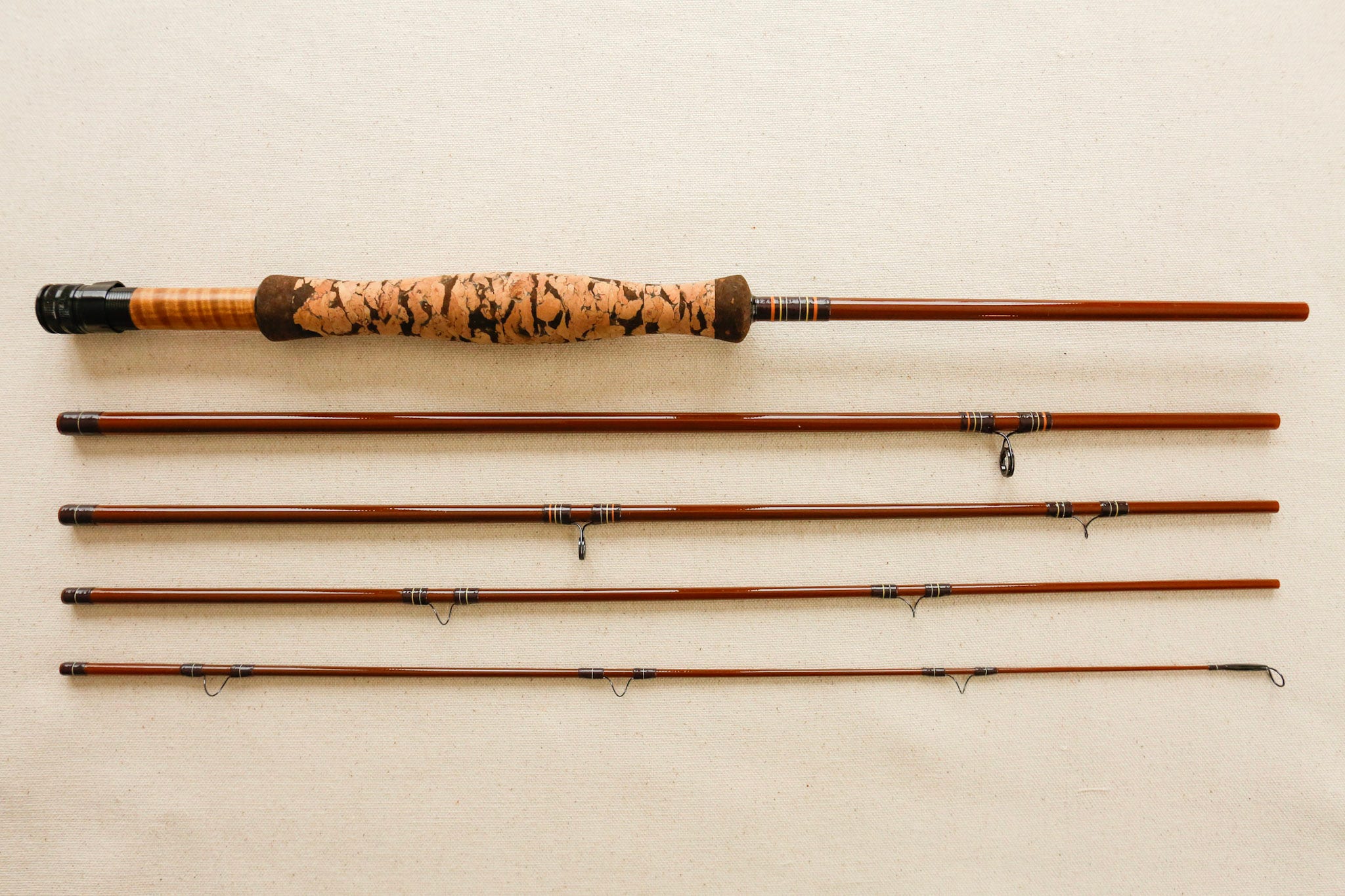
After nearly nine months, Codename Bronco is finished.
Like most of my projects, it took longer than planned, required more labor than expected, and cost more than I’d budgeted. Looking over my notes, it seems I spent roughly 100 hours on the build and about five hundred dollars on materials, tools, and consumables including the blank and hardware. The rod isn’t perfect. But that’s the point. The imperfections feel honest, evidence of time, attention, and hands learning as they went.
The funny part? I haven’t cast it yet. I haven’t strung it up or fished it. For all I know, it won’t throw a line worth a damn.
But sitting here now, looking at the finished rod, I’m not sure that even matters. The work exists. The object is real. And whatever happens on the water will be both a continuation and a beginning.


Beyond the Bench
Codename Bronco may be built, but the work needed to bring it to the water isn’t complete.
I’ve had a specific reel in mind for much of this build, one that feels authentic to its styling, mechanically honest, and well-suited to the caliber of fish it will some day land.
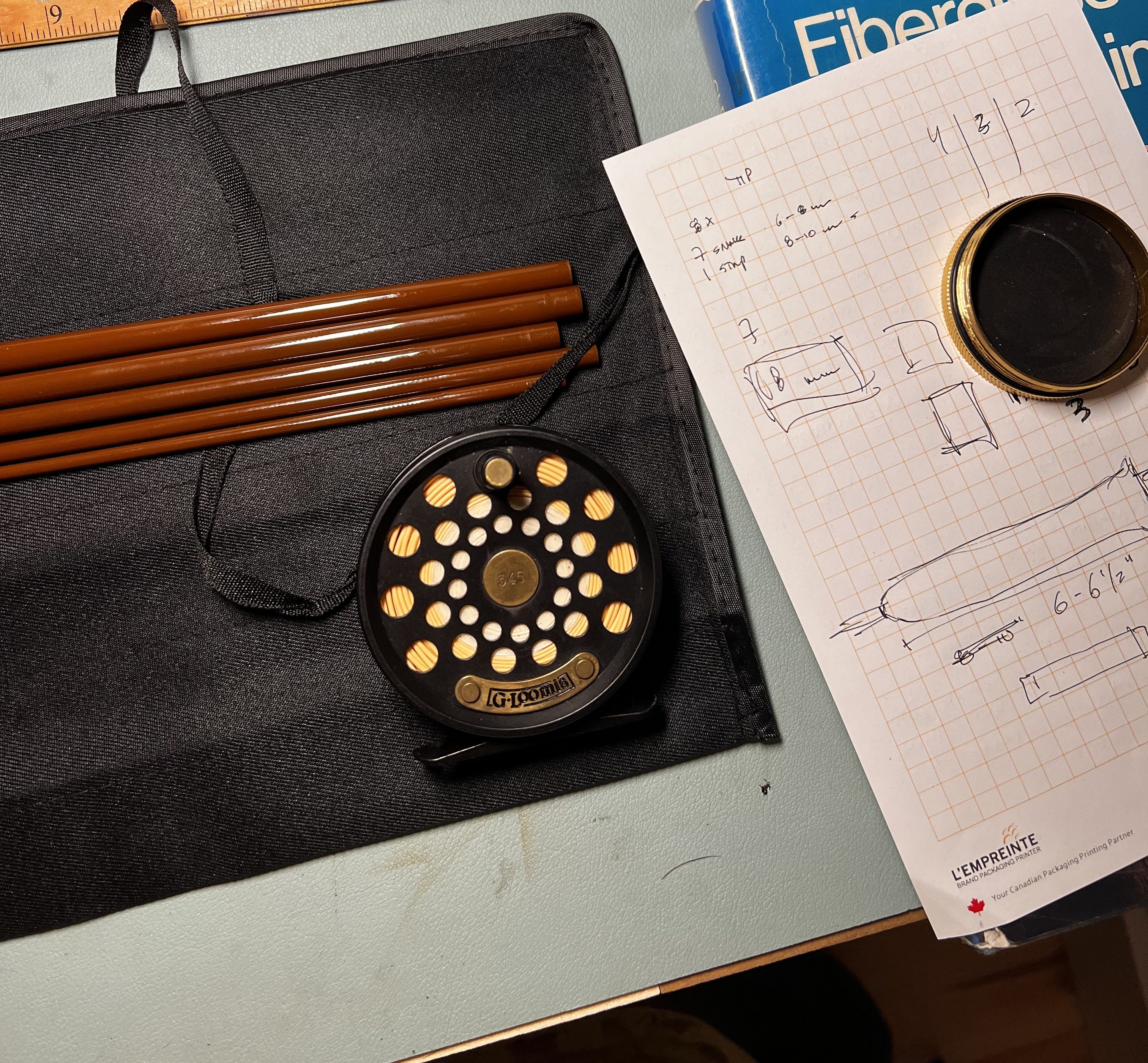
More importantly, I’ll need to pair this rod with a suitable line. This rod is designated as a 4wt, but finding the right taper and grain weight to complement it will be more of an art than a science. Those details matter, and they’ll be approached with the same patience that shaped the build itself.
These decisions mark the transition from object to instrument. And as Codename Bronco moves closer to the water, the next build will take its place.
After all, Benchcraft isn’t about projects. It’s a practice. One build simply gives way to the next.
Fantastic work. The theme is spot on—in inspiration and execution. Would love to hear the story on the reel. Seems like a choice imbued with intention and worthy of its own post.
Great project - both building the rod and recording the process.
Interesting that you chose a fiberglass blank. Most rod builders will use graphite or cane. And yet, for small stream fiberglass could provide a great experience. And the five piece blank makes a lot of sense. Winston used to make five piece rods and it was wonderful the way that they would fit into a regular duffel bag.
I have thought for a long time that too much of fly fishing is now focused on bigger and easier rather than better. And yet, classic fishing literature is more focused on going deep - into the knowledge, traditions and craftsmanship. The “Bronco” is a great step in that direction.