


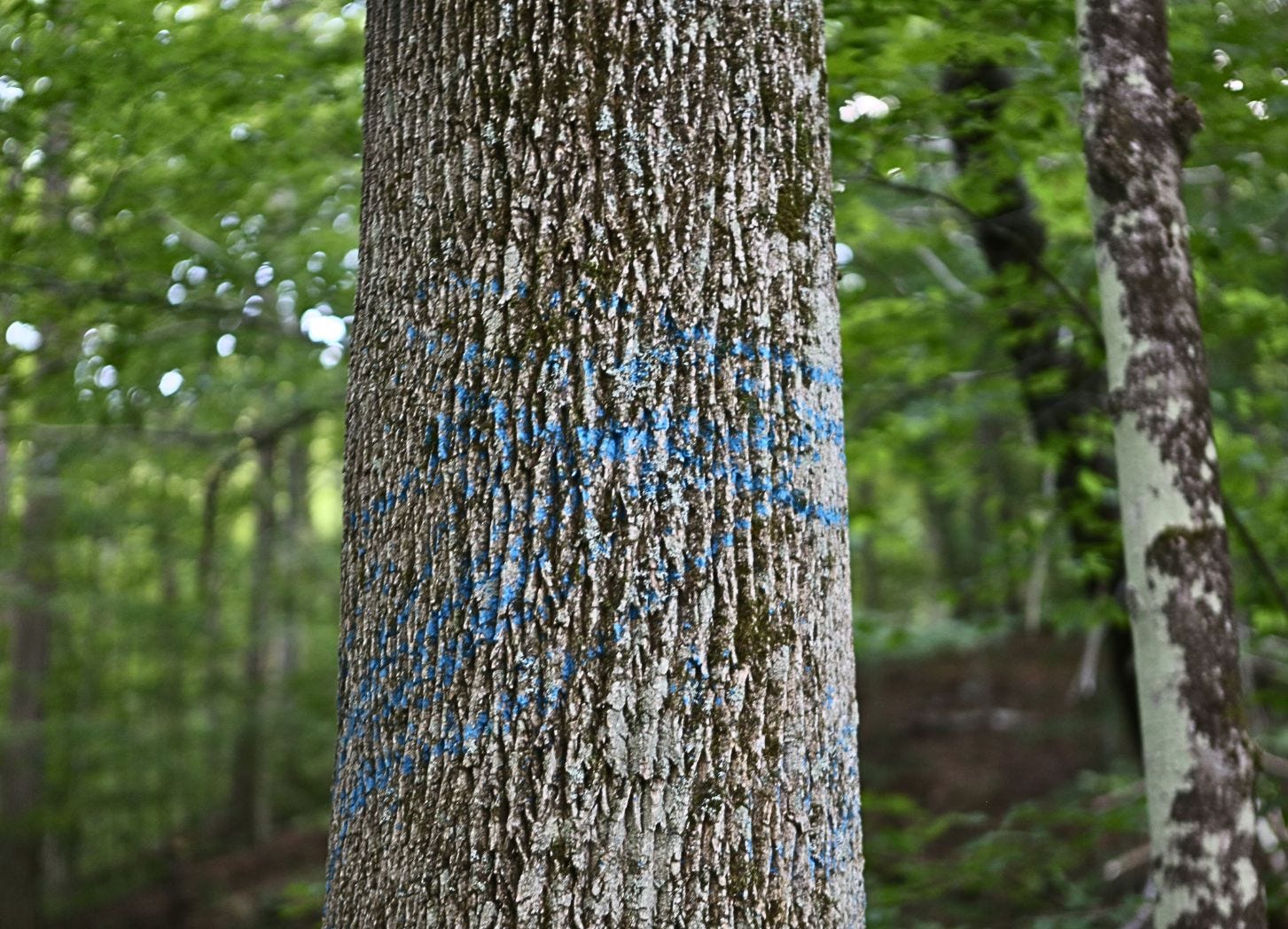
All roads lead somewhere. In the case of Honey Brook, the road leads to 624 acres of State land known as White River Wildlife Management Area. And, more importantly for this story, a forest of mature hardwoods with significant value in today’s timber market.
The State owns the land. But it doesn’t own the trees.
The reason goes back to 1961, when a local man named Ken Webster sold 325 acres to the State of Vermont. This land would become the central piece of today’s WMA. As part of that transaction, Webster retained the timber rights to the property. When he died in 2009, those rights passed to his heirs. And until recently, they remained largely dormant.
The result is an unusual division of interests: Vermont owns and manages the land as a Wildlife Management Area, while private parties retain the right to harvest much of the timber growing upon it.
This arrangement has complicated the State’s management of the WMA. Why spend public money building and maintaining permanent roads, bridges and other infrastructure when a future logging operation may require something entirely different? For decades, the timber rights have hung over the WMA, limiting what the State can reasonably do with the land it owns.
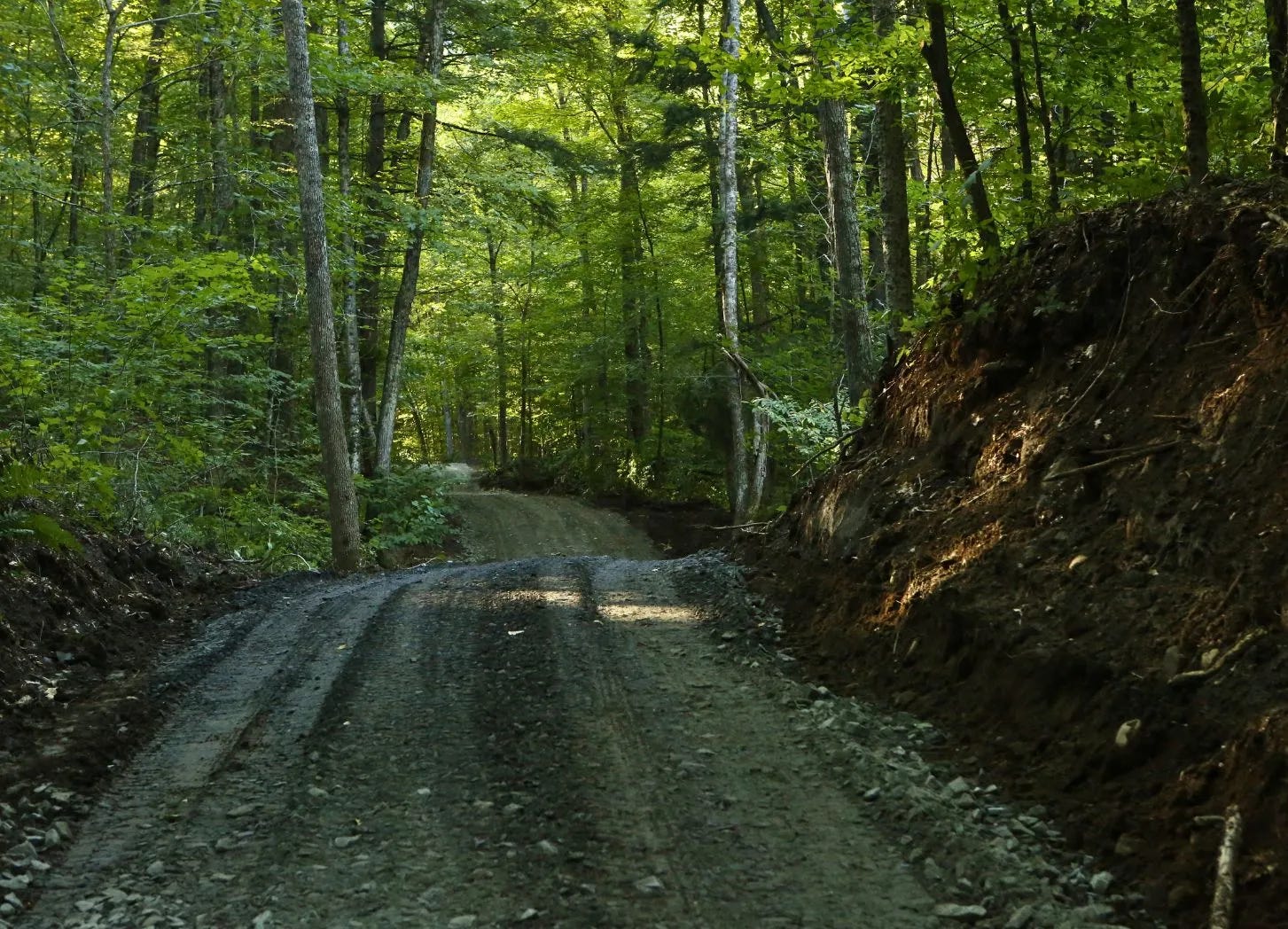
Here’s the catch. The Wildlife Management Area at the end of Honey Brook is home to some of the rarest ecological communities in the State.
There are two rare natural communities within the WMA. The first is a calcareous riverside seep, a place where mineral-rich groundwater emerges and supports several rare plant species and deposits cold, fertile water into the White River.
The other is a sugar maple–ostrich fern riverine floodplain forest, a rare hardwood community shaped by the rich soils and periodic flooding of the river. These sites are ranked S1 and S2 respectively—the State’s highest and second-highest rarity rankings—and are considered extremely rare or very rare in Vermont. These areas are in the middle of where the logging will take place.
Logging is scheduled to commence in a matter of days.
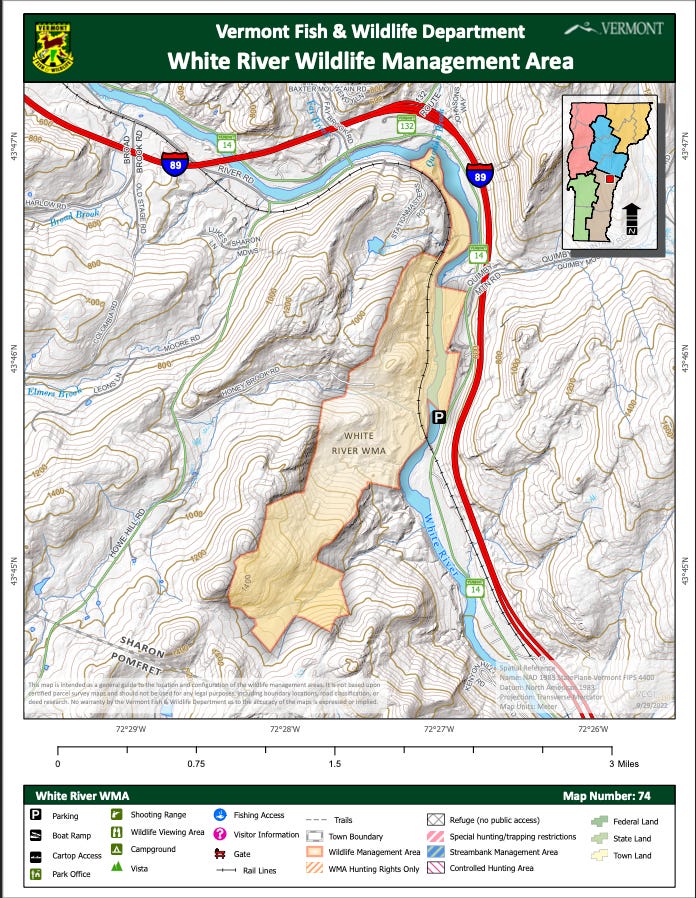
In the last week, I’ve reached out to several Vermont agencies asking that they review the WMA to ensure these rare ecosystems are protected. Through state representatives and members of Congress, I was able to get my concerns raised with the Secretary of the Agency of Natural Resources and the Commissioner of Vermont Fish and Wildlife.
Today, I received a response. In essence, the State believes the system is working as intended.
The State's response, excerpted for relevance, read in part:
Thank you for reaching out about the timber harvest at White River Wildlife Management Area (WMA) in Sharon. By way of background, while the Department of Fish and Wildlife (DFW) owns the roughly 400-acre WMA, the timber rights belong to the Webster Co., which is not legally obligated to follow DFW’s forest-management recommendations. That said, Webster Co. remains required to follow the state’s Acceptable Management Practices (AMPs) for water quality and is actively collaborating with expert staff from both DFW and FPR to address many of the concerns you raised.
FPR’s [forester] has been on-site with, [name redacted], Webster Co.’s forester to ensure AMP compliance. The planned adjustments to stream crossings and nearby road conditions are expected to improve, not harm, water quality. We share the goal of eventually removing the failed crossing structure on Honey Brook to restore aquatic organism passage and natural stream function, but that work is beyond the scope of this operation and will require separate engineering and permitting.
[…]
Finally, I wanted to make you aware that DFW is in discussions with Webster Co. to acquire the timber rights based on a recent valuation of the timber resource, which we see as an opportunity to further strengthen DFW’s long-term stewardship of the WMA.”
One sentence in the response stood out to me: Webster Co. “is not legally obligated to follow DFW’s forest-management recommendations.
In other words, the State owns a Wildlife Management Area containing some of Vermont’s rarest natural communities, but the agency responsible for managing that wildlife habitat cannot require the owner of its timber rights to follow its forest-management recommendations.
The State did say that its mapped significant natural communities and rare species, and that they are they are outside the current logging operation. These maps, however, were not provided. Nor did they outline where the logging would actually take place. Without this data, I have not been able to independently determine whether these areas overlap.
The State also maintains that this doesn’t leave the WMA without protection. Webster is still required to comply with Vermont’s AMPs, and officials say FPR and DFW staff are working with Webster’s forester to ensure that happens. They also contend that the changes being made to the road and stream crossings will ultimately improve water quality.
But the AMPs are the very protections that brought me here in the first place.
The State’s response also confirmed something else I had learned through the course of my reporting: Vermont is actively negotiating with Webster to acquire the remaining timber rights.
According to Webster, the two sides have been unable to reach an agreement because of their differing valuations of those rights. He told me that the State intends to purchase the rights after the current harvest is complete for $330,000. The State has confirmed that negotiations are underway, but has not confirmed Webster’s $330,000 figure or that completion of the harvest is a condition of the sale.
If that’s accurate, it creates an unusual set of incentives. Every valuable tree removed from the WMA potentially reduces the value of the timber rights the State ultimately hopes to acquire. At the same time, the State agencies responsible for managing and protecting this public land are being asked to oversee the effects of the harvest.
If harvesting valuable timber makes the remaining rights less expensive to acquire, it creates a peculiar alignment of interests. The agencies responsible for protecting the WMA are also overseeing a harvest that may ultimately make the State’s acquisition of those rights easier.
That raises a question I haven’t been able to shake: does the State have an interest in allowing this harvest to proceed quickly that competes with its interest in protecting the land beneath it?
What, then, is the State doing to ensure that a privately exercised timber right does not damage the public land beneath it?
And who, then, speaks for the rare ecosystems within the WMA when the State charged with protecting them also has an interest in the outcome of the harvest?
Aldo Leopold once wrote, “We abuse land because we regard it as a commodity belonging to us.”
Honey Brook presents an unusually literal version of Leopold’s problem.
The land belongs to one party. The trees belong to another.
Both have value.
But neither accounting necessarily captures everything else that lives there.
A deed can separate the ownership of the land from the ownership of its timber. The ecosystem itself recognizes no such distinction. The seep is connected to the forest above it. The floodplain is shaped by the river beside it. Honey Brook depends upon the soil, roots, shade and groundwater surrounding it. Beneath its cold water lives a population of wild, native brook trout.
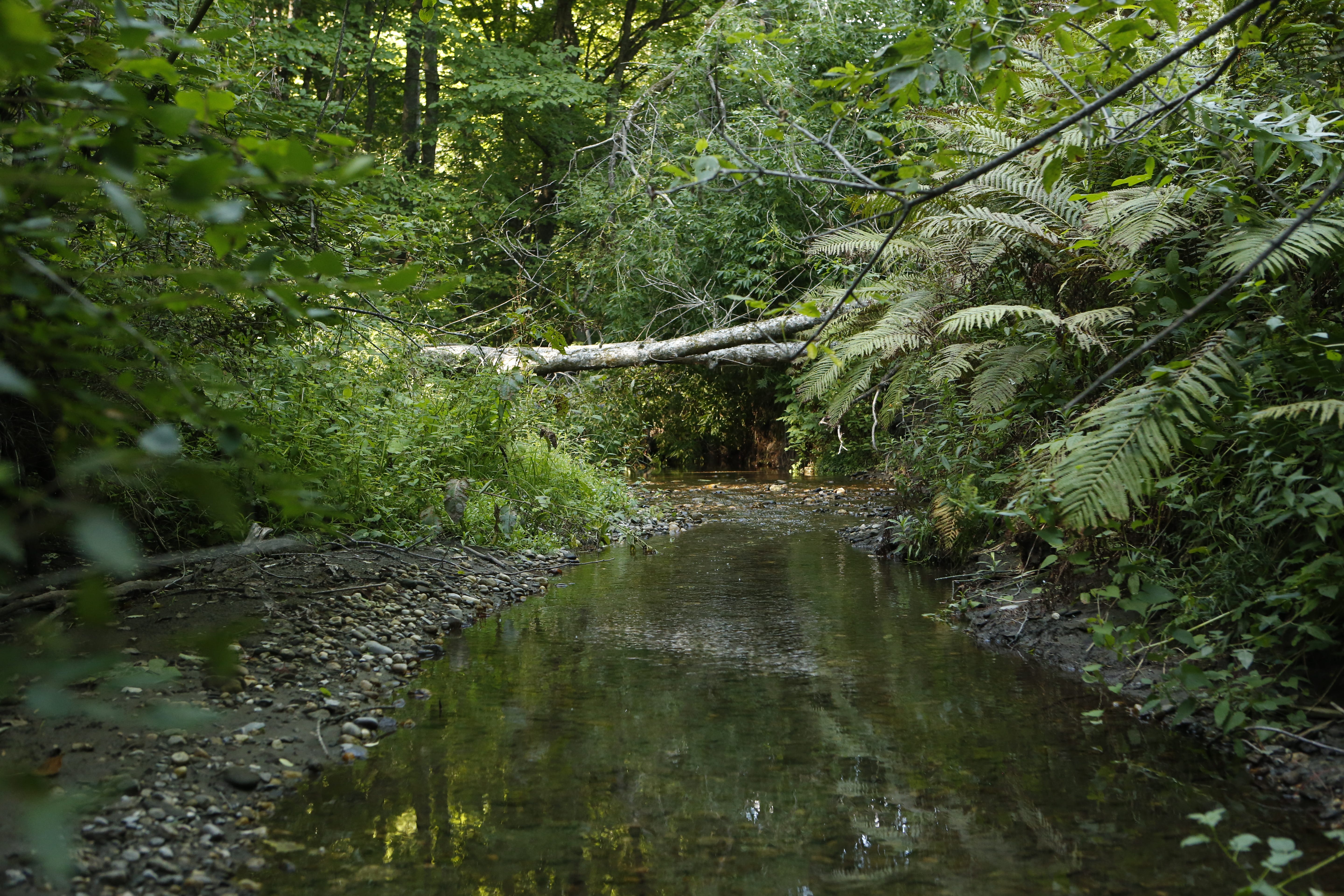
There is a danger in measuring nature only by what it provides to us. Most of the living things that comprise a healthy ecosystem have little or no readily apparent economic value. Once usefulness becomes the measure of value, the things we cannot readily price can begin to look worthless. And when things are worthless, they become expendable.
There is another way to think about nature’s worth: intrinsic value. A brook trout doesn’t need to be caught to matter. A wildflower doesn’t need to cure a disease to justify its bloom. A forest is more than board feet of lumber.
Its existence can be enough.
I spent much of Saturday hiking the WMA alone. With the logging operation about to commence, I wanted to see the land before it was disturbed, to fix some version of it in my memory. I climbed down to Honey Brook, where a series of waterfalls plunged into deep pools, spooking small brook trout from the shallows as I went.
At its confluence with the White River, I knelt and splashed the cold water over my head, neck and arms. As afternoon slipped into evening, shafts of light reached through the canopy and illuminated the quiet understory.
I found a place to sit and stayed there for a long time.
There was no way to put a number on what I felt.
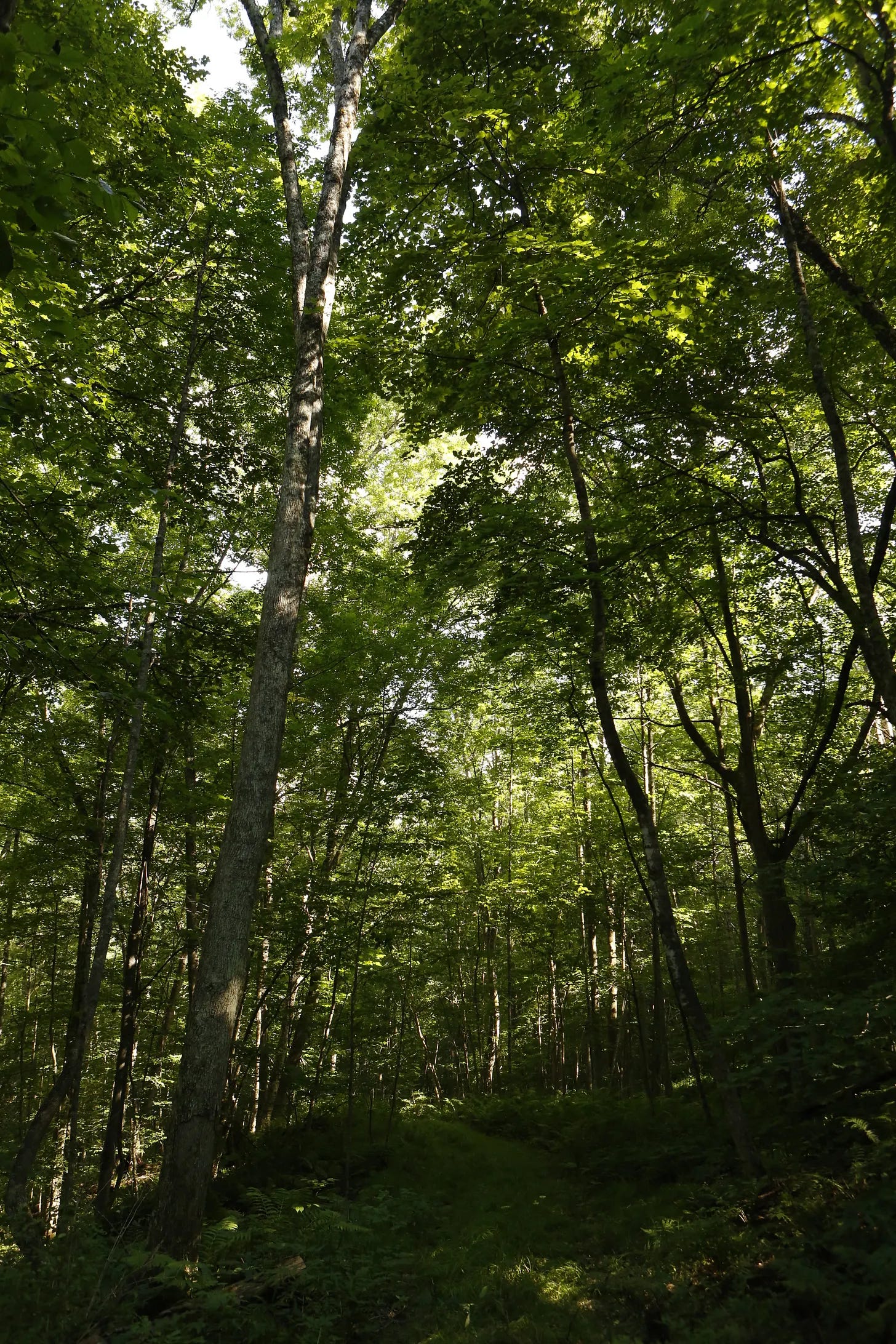
The logging project on Honey Brook is currently underway with logging to begin on the WMA in the next few days.
Stay tuned for more reports about its status in the coming days and weeks.
Read More From the Honey Brook Papers:
Who Speaks for the Brook?

A logging road crosses a wild trout stream. Vermont has rules for what happens next. But who makes sure they’re followed?